
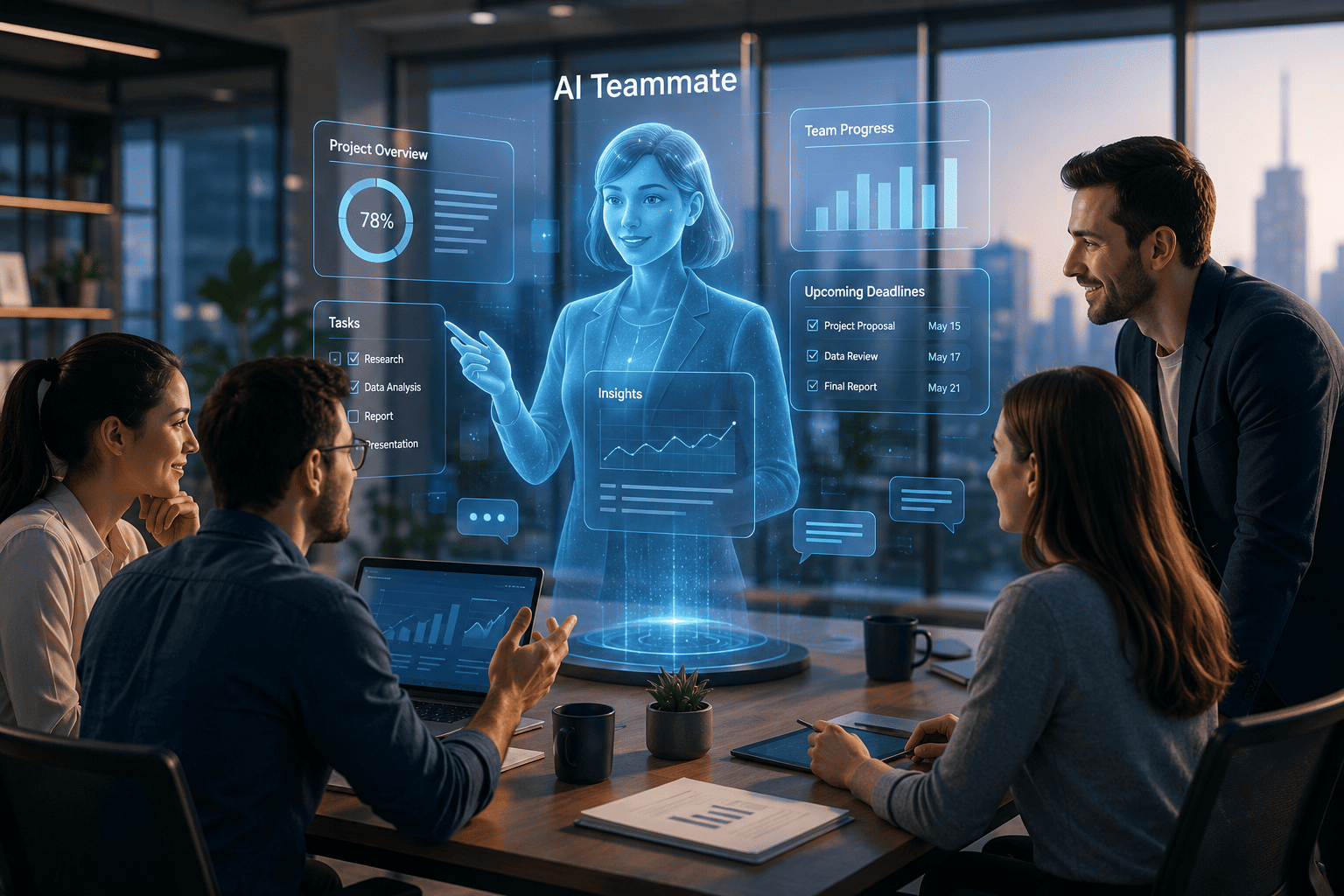
The development of AI in recent years is also fast. It has become a technology that changes the way companies do business. In many firms, AI is implemented to facilitate the analysis of data, production of content, assistance to customers, and decision-making. Nevertheless, AI is about to change its meaning yet again.
Software used to be an instrument that employees employed to perform certain actions. People would install applications on computers to help them accomplish their duties. Modern AI is taking software to the next level. Instead of serving solely as a tool, AI is beginning to play an active role in workflows. AI helps people work together to find solutions to problems and accomplish projects.
The result of such development is the emergence of a new term – “digital teammate”. Unlike other technologies, AI allows one not just to work together but also to collaborate with each other in ways that could have never been possible before.
The Traditional Role of Software
For better comprehension of where AI technology is moving, it is essential to review how software applications have typically functioned in the past.
Generally speaking, business software has been utilized as a means that assists users in completing certain jobs. Word processors enable employees to produce documents. Spreadsheets facilitate calculations. CRM systems maintain records of customers. Project management tools manage projects and their deadlines.
While software may enhance productivity, it normally requires the direction of the user who decides on what to do and uses software to implement his/her decisions.
Here, software serves as an assistant yet does not come up with suggestions nor completes any challenging tasks by itself.
The Rise of Intelligent Assistance
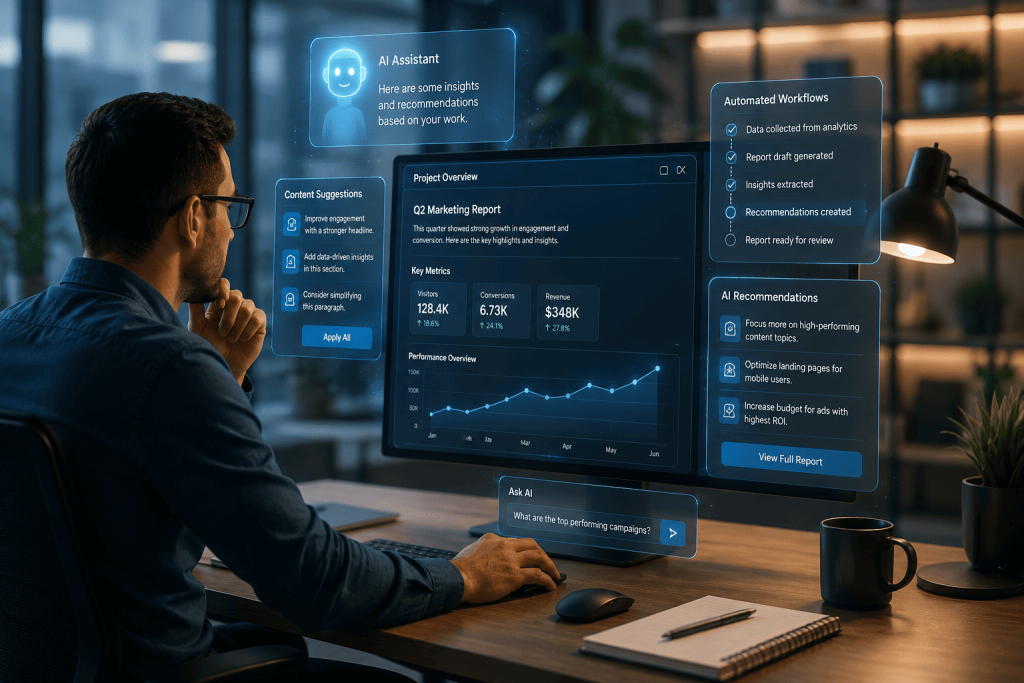
The development of AI technologies altered the human-software interaction dynamic.
Not only can AI technology store information or do calculations but also understand language, recognize patterns, create content, and even learn. Consequently, it is possible for AI software to perform tasks that go further than mere processing.
Examples of such activities include creating drafts for email messages, summarizing reports, providing recommendations on content, generating code blocks, detecting coding mistakes, answering user questions, and guiding through procedures.
Thus, through AI, software turned into an intelligent helper of people.
Nonetheless, it is only one part of a bigger picture.
What Is a Digital Teammate?
A digital teammate refers to an AI-driven system that works together with humans in order to accomplish particular objectives.
In contrast to other software tools, a digital teammate can engage in workflow, carry out complex activities, process information, and make suggestions. In some cases, it can even finish the whole process with little oversight required.
The idea can be likened to collaboration with a fellow human. The digital teammate will do repetitive tasks, give opinions, and assist with decision-making, while employees can focus on more challenging matters.
It does not replace people; instead, it boosts the performance of human workers through automation.
This approach shows a major change in the perception of technology in businesses. Companies now ask questions like, “How can AI boost our teams?” instead of “Which software should we utilize?”
The Journey from Tools to Teammates
The evolution of AI can be viewed as a progression through several stages.
Stage 1: Traditional Software Tools
Software performs specific tasks based on user commands.
Examples include:
- Word processors
- Spreadsheets
- Accounting software
- Project management platforms
Stage 2: Intelligent Assistants
AI begins helping users perform tasks more efficiently.
Examples include:
- AI writing assistants
- Virtual customer support agents
- Smart search systems
- Automated scheduling tools
Stage 3: Digital Teammates
AI collaborates with users and participates in workflows.
Examples include:
- AI agents that manage customer inquiries
- AI systems that monitor business operations
- Intelligent research assistants
- AI-powered software development tools
This progression demonstrates how technology is becoming increasingly capable of contributing meaningful value beyond basic automation.
How Businesses Are Already Using Digital Teammates
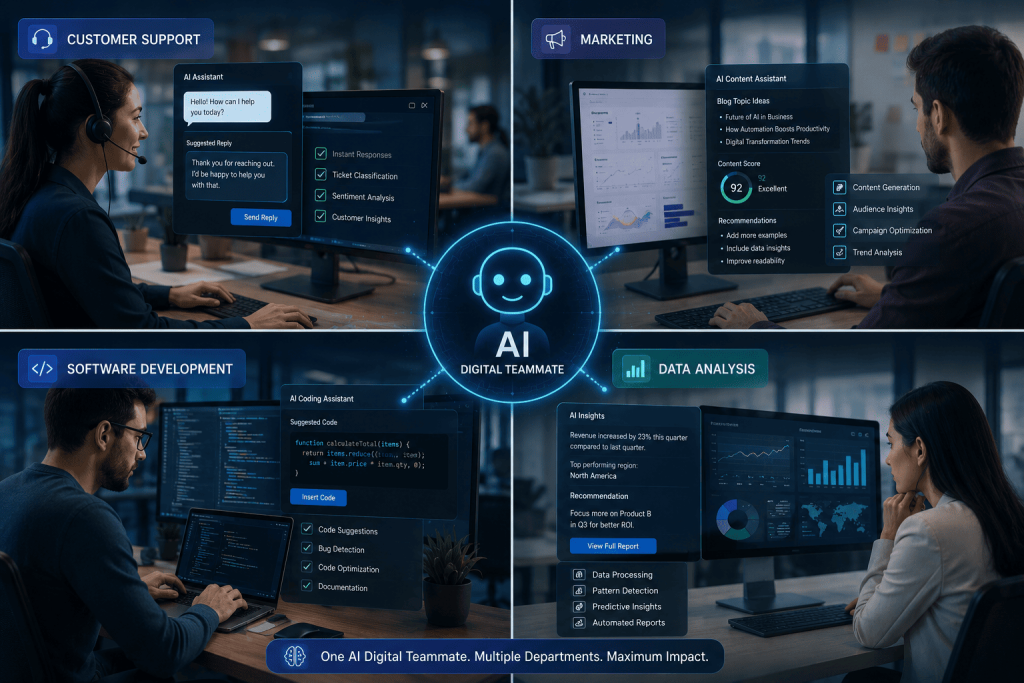
The idea of digital coworkers might seem like something from the future, yet most businesses employ such systems in different ways today.
Customer Support
The use of AI in customer service helps address frequently asked questions, provide information on the company’s products, and solve problems for clients.
Such systems work continuously, processing vast amounts of inquiries, while humans resolve more complicated situations.
Software Development
There is an increasing dependence on AI coding assistants that give developers code suggestions, detect bugs, and increase efficiency.
The role of such systems includes assisting programmers in reducing the time spent on mundane jobs and concentrating on solving complex problems.
Marketing and Content Creation
AI software can assist marketing departments in developing content ideas, writing articles, analyzing consumer behavior, and optimizing campaigns.
Instead of making marketers redundant, AI lets them do their job faster.
Data Analysis
A business collects a tremendous amount of data daily. AI is used to analyze this data, detect any trends, and offer useful suggestions.
It helps businesses to make better decisions without wasting a lot of their time analyzing the collected data.
Human Resources
AI technologies are used in recruitment, hiring, and planning the workforce.
Since these activities will be automated, HR managers will have more time to engage in organizational activities.
Benefits of AI as a Digital Teammate
The growing adoption of digital teammates offers several advantages for businesses.
Increased Productivity
AI performs boring tasks much faster compared to human beings.
Thus, workers have plenty of time to engage in creative processes.
Faster Decision-Making
It takes a few seconds to scan through a lot of data using digital assistants.
Firms can therefore make decisions quickly and adapt to market changes.
Improved Efficiency
The efficiency of AI lies in how it streamlines processes that used to be time-consuming.
Consequently, the amount of work done is increased without using additional manpower.
Better Customer Experiences
Through artificial intelligence, businesses are able to offer quick responses, customized solutions, and constant support.
This ensures customers remain happy at all times while relieving employees of stress.
Scalability
Unlike traditional staffing models, digital teammates can handle growing workloads without requiring additional hiring for every increase in demand.
This makes AI particularly valuable for businesses experiencing rapid growth.
Why Human Employees Still Matter
Even as we develop AI, the skills of humans are important.
Some of the strengths of AI include its ability to analyze data, detect patterns, and execute repetitive processes. But there are many strengths associated with working together as humans that AI does not have.
Humans can be:
- Creativity
- Emotional intelligence
- Ethical judgment
- Leadership
- Strategic thinking
- Relationship building
A future workplace will probably have more than just humans or AI. It will require collaboration between both of them.
Businesses that find success with AI and humans together could end up doing better.
Challenges of Managing Digital Teammates
As businesses adopt AI more extensively, they must also address several challenges.
Data Privacy
AI systems often rely on large amounts of information to function effectively.
Organizations must ensure that data is handled responsibly and in compliance with relevant regulations.
Trust and Transparency
Employees and customers need confidence in AI-generated recommendations and decisions.
Businesses should prioritize transparency and establish clear guidelines for AI usage.
Human Oversight
Even advanced AI systems can make mistakes.
Human oversight remains critical for verifying results, managing exceptions, and ensuring accountability.
Workforce Adaptation
The introduction of digital teammates may require employees to develop new skills and adapt to changing workflows.
Providing training and support will be essential for successful adoption.
The Future of Human-AI Collaboration
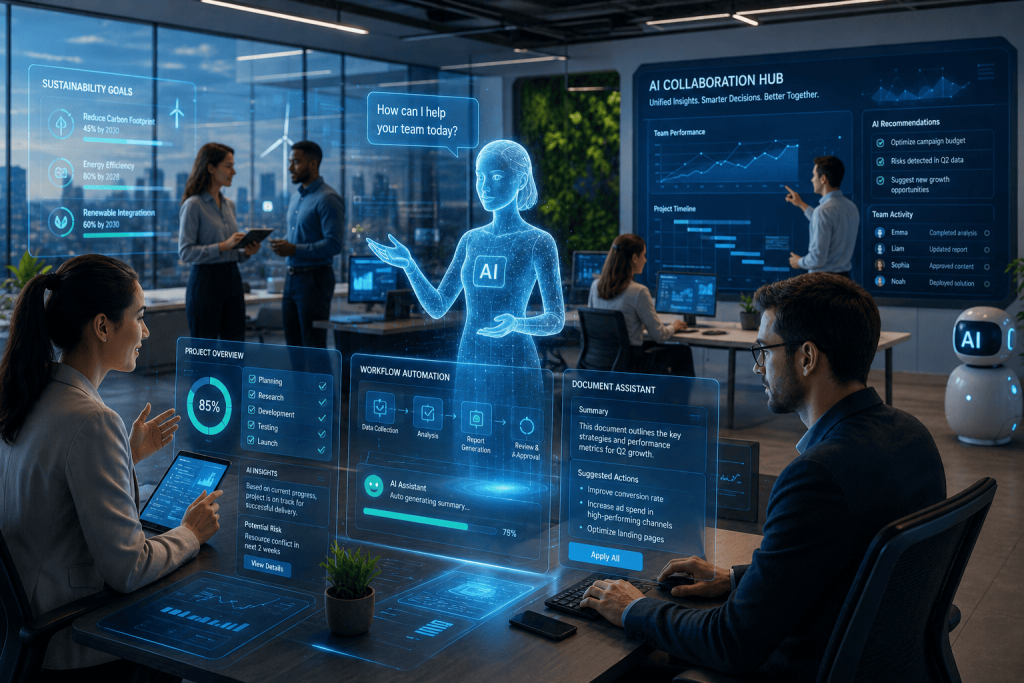
With further advancement of AI technology, digital assistants will surely get even more sophisticated and integrated with business activities.
Future AI systems may:
- Manage complex workflows independently
- Coordinate with multiple software platforms
- Provide proactive recommendations
- Assist with strategic planning
- Support cross-functional collaboration
These AI systems won’t exist as separate programs but will be integrated into business activities.
Organizations that will get ready for this shift now will reap more benefits from it in the future.
Conclusion
AI is changing software into an active partner instead of a mere tool. Instead of just using software as a means to increase productivity, we are developing software as an actual partner who will assist you in making decisions, automate tasks, and improve organizational efficiency.
The coming revolution in the workplace is perhaps the biggest change of all. Corporations are going to move away from conventional software applications towards a new approach where humans collaborate with AI systems to reach their objectives.
The future of work should not involve competition between humans and machines but a collaborative environment whereby both parties cooperate to get the best results possible.