
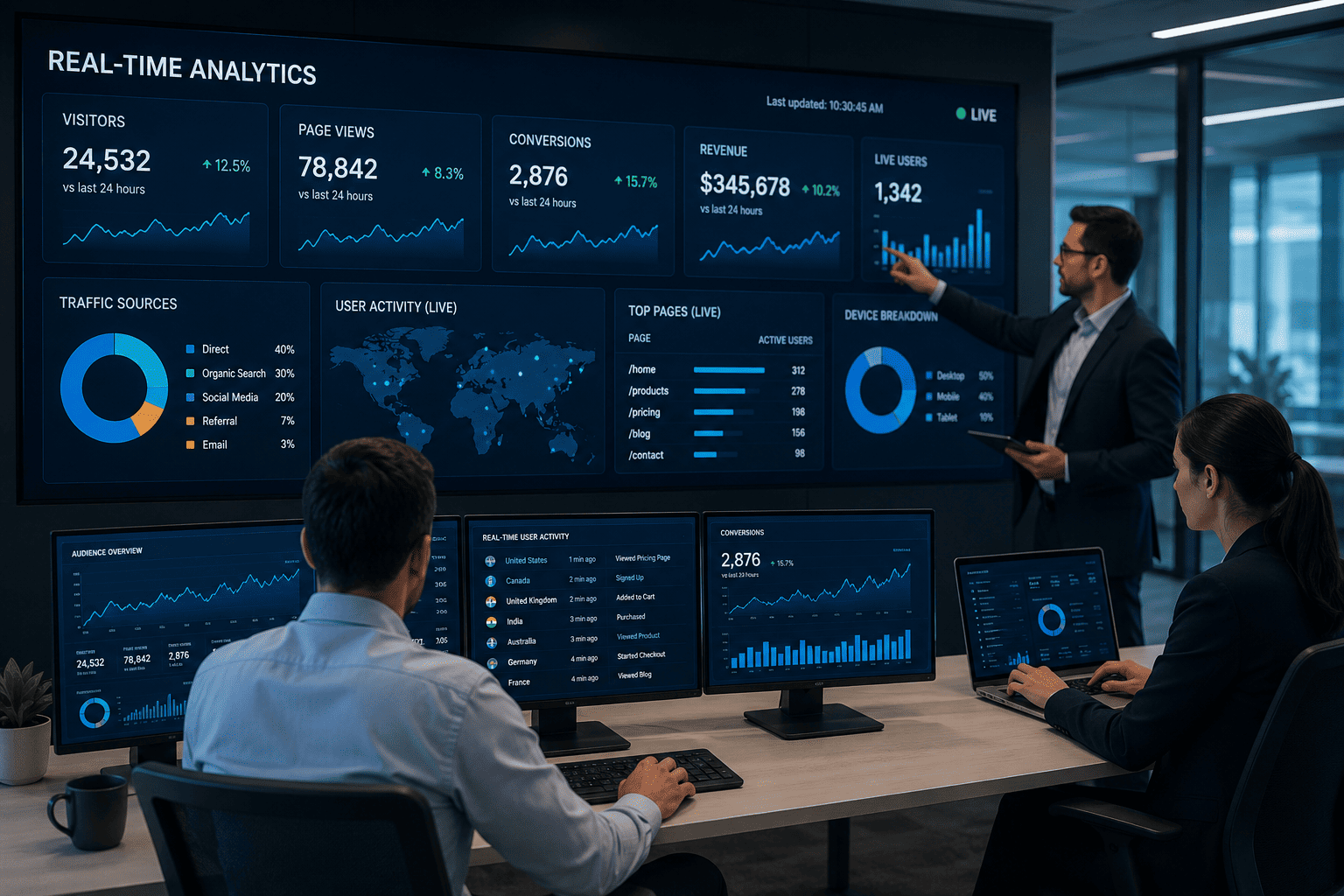
In this digital age, companies gather tons of data from every click on their site, each mobile app use, every sale, support ticket, and operation. Just collecting info isn’t enough though; the key is knowing how to understand and quickly react to it.
Real-time analytics is huge here. It lets firms track, process, and analyze data right away, leading to quicker, smarter decisions. They can react instantly to what customers do, market shifts, and other problems without waiting around for report times.
Whether it’s e-commerce sites, bank apps, health services, or logistics programs, many now depend on real-time analytics to ramp up efficiency, make users happier, and boost growth.
What Is Real-Time Analytics?
Real-time analytics involves collecting, processing, and analyzing data right when it’s generated.
Unlike traditional analytics, which depends on historical reports and past data, real-time stuff offers immediate info that businesses can use right away.
For example:
- An e-commerce platform can track customer purchases as they occur.
- A logistics company can monitor delivery vehicles in real time.
- A financial institution can detect suspicious transactions instantly.
- A customer support platform can identify service issues before they affect large numbers of users.
By transforming live data into actionable insights, businesses can react quickly and make smarter decisions.
Why Real-Time Analytics Matters More Than Ever
Customer expectations have evolved significantly in recent years.
Modern consumers expect:
- Faster services
- Personalized experiences
- Instant responses
- Reliable digital platforms
At the same time, businesses work in super competitive spaces where slow decision-making means losing out on opportunities.
It bridges this gap by providing organizations with immediate visibility into what is happening across their systems, customers, and operations.
This way, firms can avoid guesswork and base their decisions on up-to-date info.
Improving Customer Experiences
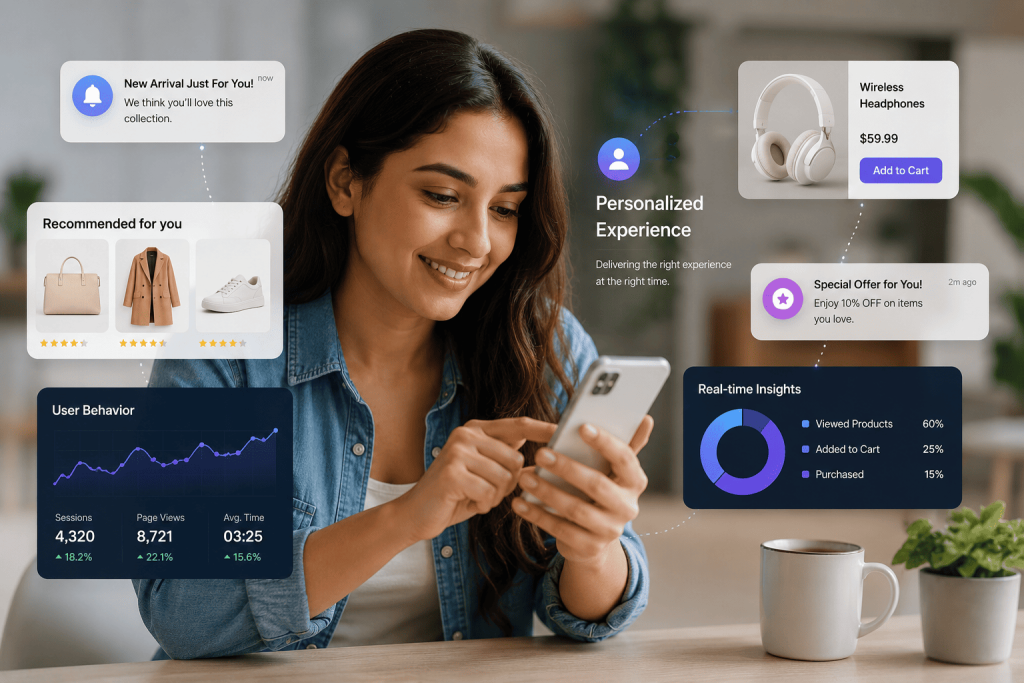
Real-time analytics boosts customer experiences by understanding user preferences and responding swiftly to their needs.
Today’s users expect applications to understand their preferences and respond to their needs quickly.
With real-time analytics, businesses can:
- Reduce friction in user journeys
- Track user behavior instantly
- Personalize recommendations
- Identify customer preferences
- Improve engagement
Streaming services suggest stuff based on what you’re watching right now. Same goes for online stores; they show personalized product picks after you’ve looked at certain items.
This makes for a way more relevant and engaging user experience.
Supporting Faster Business Decisions

Business decisions rely heavily on the quality of the info they’re based on.
Traditional reporting systems usually come in after the event, making them less helpful. By the time managers get the reports, it’s often too late to do anything useful.
Real-time analytics eliminates this delay.
Organizations can monitor:
- Sales performance
- Marketing campaigns
- Website traffic
- Customer interactions
- Operational metrics
As events occur, managers gain immediate visibility into performance and can take corrective action when needed.
This leads to more agile and responsive business operations.
Enhancing Operational Efficiency
Modern businesses rely on complex systems needing constant monitoring.
Without real-time oversight, problems might get way too big before we even notice them.
Real-time analytics helps organizations:
- Detect bottlenecks
- Monitor system performance
- Track resource utilization
- Identify inefficiencies
- Optimize workflows
For example, a logistics company can track vehicle locations, delivery progress, and route performance in real time. When delays happen, they quickly find alternatives. This boosts efficiency and cuts costs.
Detecting Problems Before They Escalate
Real-time analytics really shine by helping catch problems early. Companies don’t have to rely on customer complaints; they can find and fix things proactively.
Applications can monitor:
- System errors
- Performance slowdowns
- Failed transactions
- Security threats
- Service disruptions
When unusual activity occurs, alerts can be triggered automatically.
This allows teams to respond quickly, minimizing downtime and protecting customer satisfaction.
Strengthening Cybersecurity
Cybersecurity threats keep evolving, so proactive monitoring is essential.
Traditional security reports usually spot threats after damage has happened.
Real-time analytics lets organizations watch their digital environment constantly and catch suspicious stuff right away.
Examples include:
- Unusual login attempts
- Fraudulent transactions
- Unauthorized access attempts
- Network anomalies
- Data breaches
By identifying threats early, businesses can reduce risks and improve security outcomes.
Powering Personalized Experiences
Personalization is now a big deal in digital stuff.
Customers want companies to know what they like and show them relevant deals.
Real-time analytics enables organizations to:
- Recommend products instantly
- Customize content
- Deliver targeted offers
- Improve engagement
- Increase conversion rates
Instead of just using old data, businesses can tweak things based on what customers are doing right now.
This builds stronger connections and boosts loyalty, making customers feel more valued and understood, so they stick around.
Improving Marketing Performance
Marketing teams depend on data to judge if their campaigns work.
With traditional analytics, marketers may wait days before understanding how campaigns are performing.
Real-time analytics provides immediate insights into:
- Ad performance
- Click-through rates
- Website visits
- User engagement
- Conversion rates
This allows marketing teams to optimize campaigns while they are still running.
As a result, businesses can maximize return on investment and allocate resources more effectively.
Driving Better Product Development
In modern software development, teams rely more on actual data than on guesses.
They use real-time user interaction insights to guide decisions. This lets them know which app features people love and where users face troubles.
Real-time analytics helps teams answer important questions:
- Which features are most popular?
- Where do users encounter difficulties?
- Which pages experience high abandonment rates?
- What causes application crashes?
These insights enable organizations to build products that better meet user needs.
Real-Time Analytics Across Industries
E-Commerce
Online retailers use real-time analytics to:
- Monitor purchases
- Recommend products
- Track inventory
- Optimize pricing
Healthcare
Healthcare organizations use real-time analytics to:
- Monitor patient data
- Improve treatment decisions
- Detect emergencies
- Enhance operational efficiency
Finance
Financial institutions rely on real-time analytics for:
- Fraud detection
- Risk management
- Transaction monitoring
- Customer insights
Logistics
Logistics companies use analytics to:
- Track shipments
- Monitor fleet performance
- Optimize delivery routes
- Improve customer communication
Software as a Service (SaaS)
SaaS companies leverage real-time analytics to:
- Track user engagement
- Monitor platform performance
- Improve retention
- Optimize product development
Key Features of Applications Built with Real-Time Analytics
Modern applications that leverage real-time analytics often include:
Live Dashboards
Provide instant visibility into key metrics.
Automated Alerts
Notify teams when critical events occur.
Predictive Insights
Help businesses anticipate future outcomes.
User Behavior Tracking
Monitor customer interactions in real time.
Performance Monitoring
Track application health and system stability.
These features help businesses stay informed and responsive.
Challenges of Implementing Real-Time Analytics
While the benefits are substantial, businesses should also consider implementation challenges.
Common challenges include:
- Managing large volumes of data
- Ensuring data accuracy
- Maintaining security and compliance
- Integrating multiple data sources
- Scaling infrastructure effectively
Partnering with experienced software development teams can help organizations overcome these challenges and build scalable analytics solutions.
The Future of Real-Time Analytics
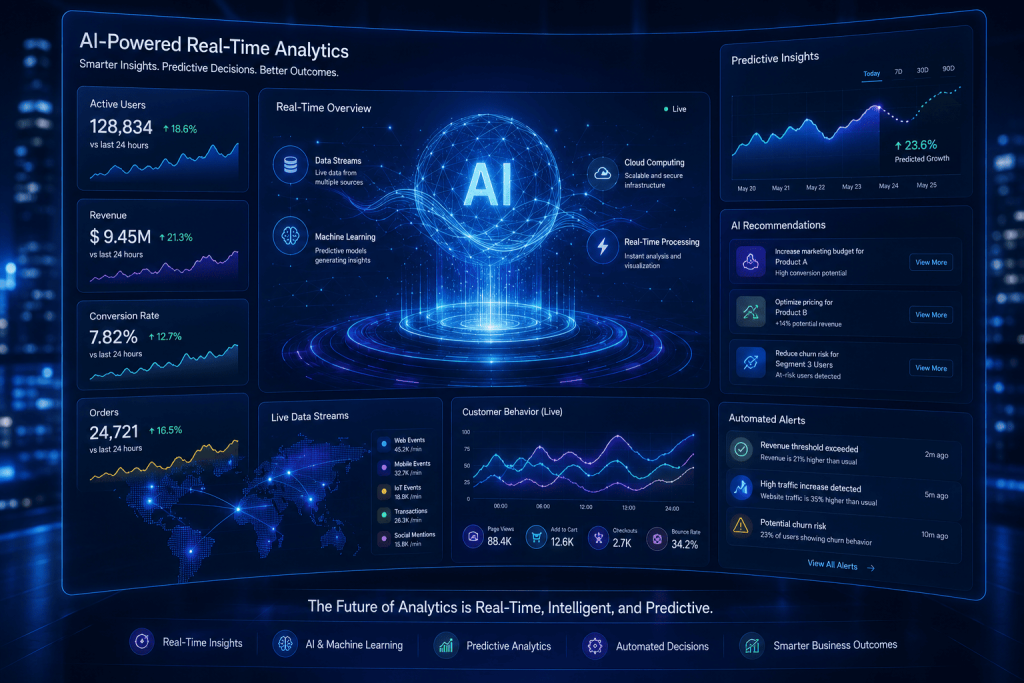
As AI, machine learning, and cloud computing keep getting better, real-time analytics will get more powerful too.
Future applications will increasingly:
- Predict user behavior
- Automate decision-making
- Deliver hyper-personalized experiences
- Detect issues before they occur
- Optimize business processes automatically
Organizations that embrace real-time analytics today will be better positioned to compete in an increasingly data-driven world.
Conclusion
Real-time analytics isn’t just for big companies anymore. It’s now a crucial part of apps in all sorts of industries.
With this, the businesses get immediate insights that help them boost customer satisfaction, run operations smoother, beef up security, tweak marketing on the fly, and respond quicker to opportunities.
As our digital setups keep changing, the groups that use real-time data well will stand out. So, making apps with real-time analytics isn’t just about tech; it’s a strategic push for being smarter, quicker, and better informed in business.