
In our modern age, users want their apps to be fast, seamless, and hassle-free. Regardless of whether the user wants to purchase, hire, or browse for information, it has to be easy without any downloads or waiting time.
For many years now, mobile apps have been the preferred platform by companies. But now, Progressive Web Apps are changing how digital experiences are built and delivered.
So, the real question is:
Are PWAs the future of mobile apps, or simply an alternative?
Let’s explore.
What is a Progressive Web App (PWA)?
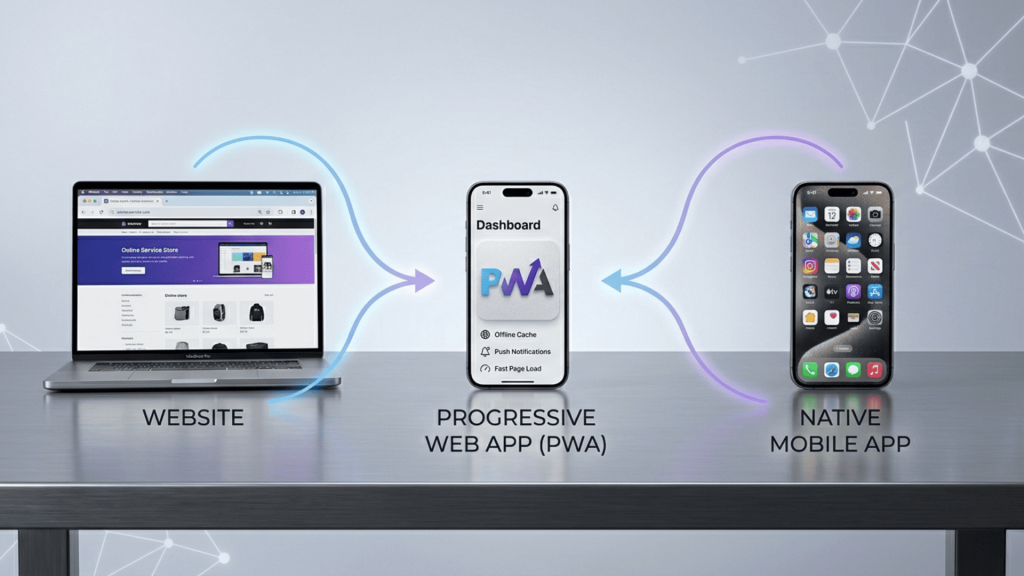
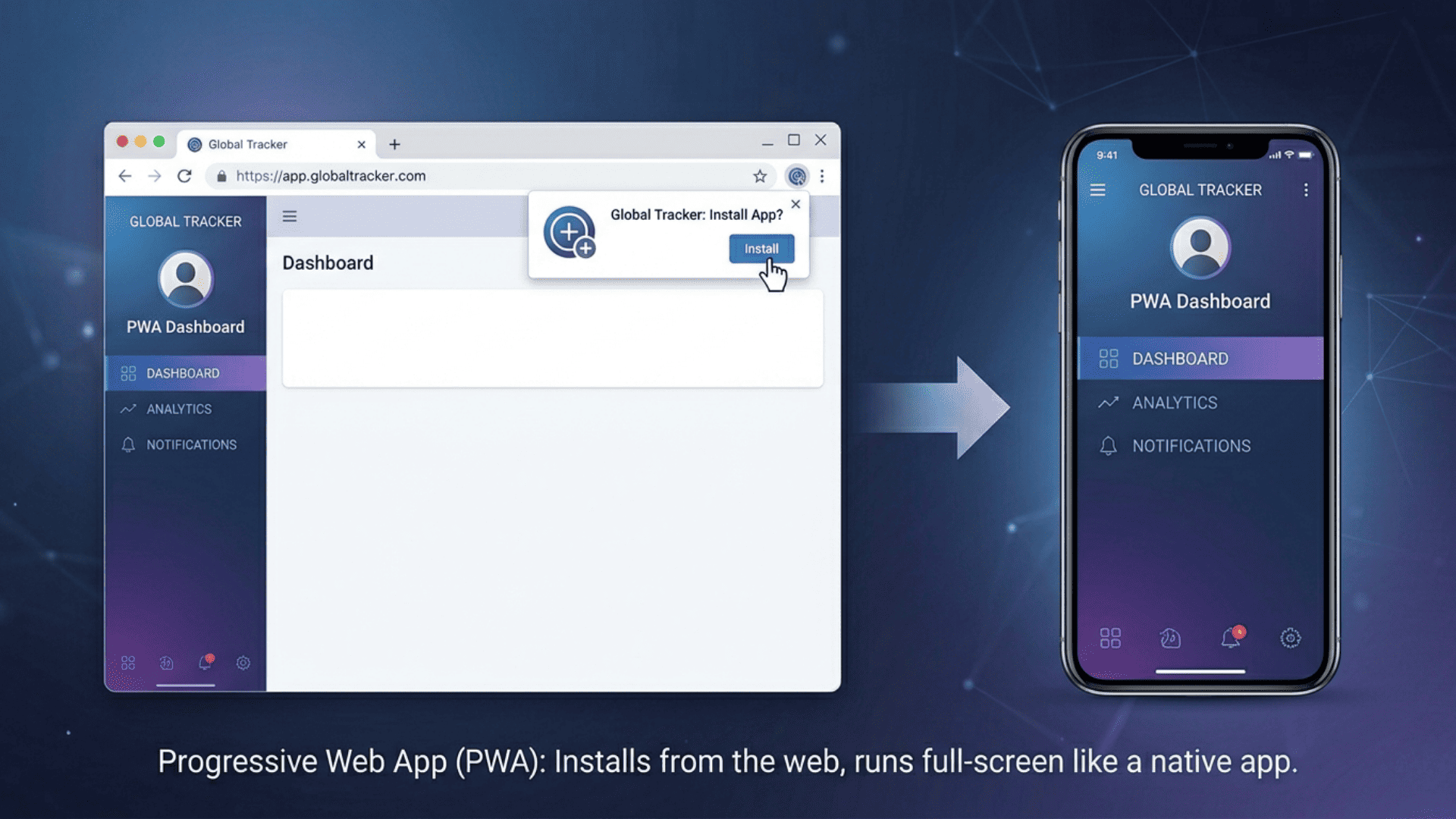
A Progressive Web App (PWA) is a web application that delivers an app-like experience directly through a browser.
Unlike traditional apps, users don’t need to install anything from an app store. With just a click, they can access the application and even add it to their home screen.
In simple terms:
A PWA is a website that behaves like a mobile app.
How Do PWAs Work?
PWAs utilize advanced web technologies to offer speed, reliability, and user engagement:
- Service Workers → Handle caching and offline functionality
- Web App Manifest → Enables app-like installation
- HTTPS → Ensures security and data protection
These are some of the ways that technologies can make your PWA fast and reliable for users.
Key Features of PWAs
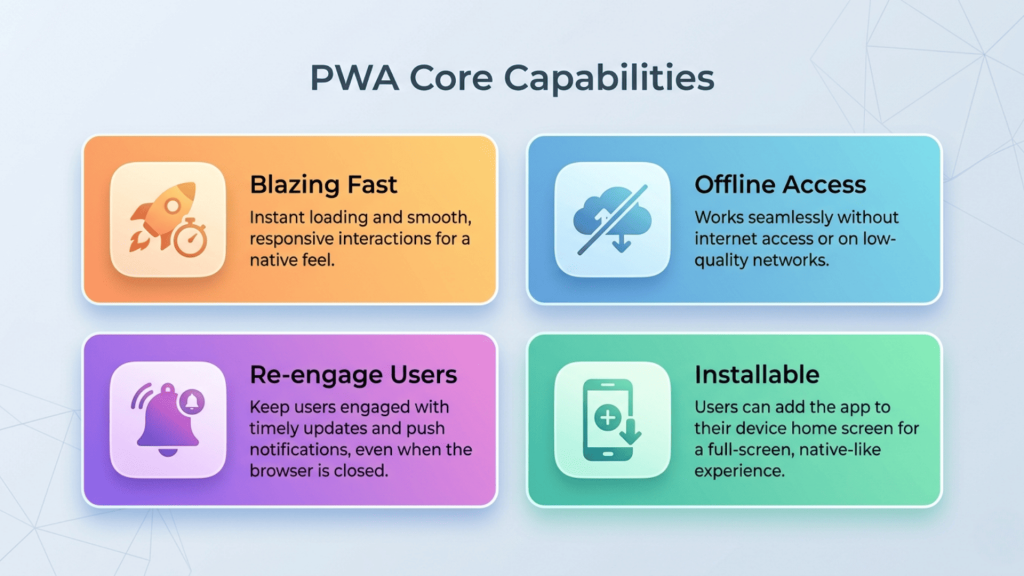
1. High-Speed Performance
Since PWAs make clever use of caching, they ensure high-speed performance even with poor internet connectivity.
2. App-Like Experience
They offer smooth navigation, interactive UI, and responsive design.
3. Offline Functionality
The content remains accessible even when the internet connection is not active.
4. Push Notifications
With PWAs, businesses can send notifications to customers through updates and messages.
5. No App Store Dependency
Users can install PWAs directly from their browser.
6. Automatic Updates
Updates are automatically updated without requiring manual upgrades.
Why Businesses Are Choosing PWAs
1. Cost-Effective Development
A single PWA works across all devices, reducing development costs significantly.
2. Faster Time to Market
PWAs are developed quickly, allowing companies to compete with rivals effectively
3. Better User Engagement
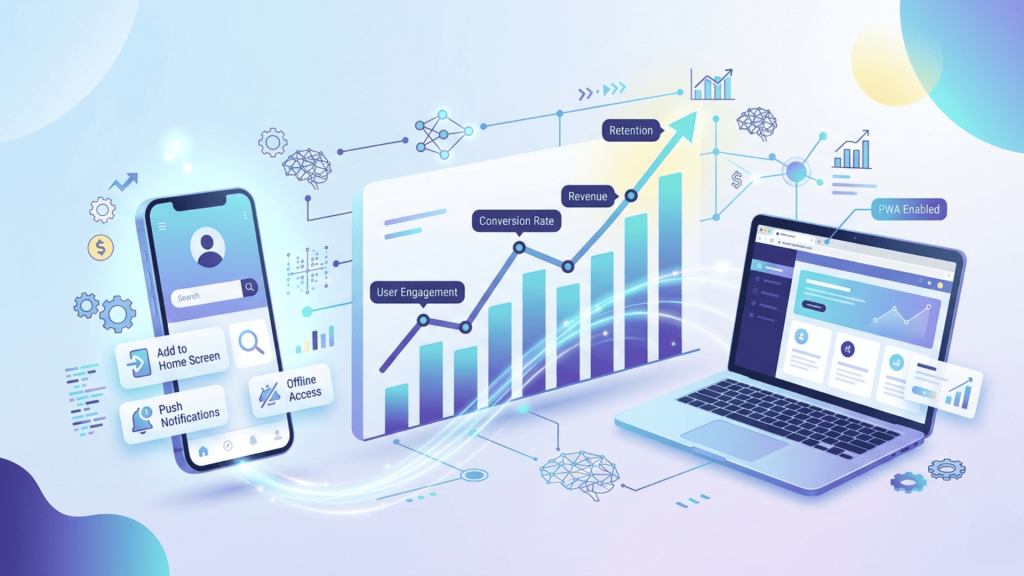
The increased speed of performance will help reduce bounce rates.
4. Wider Accessibility
The app can be reached right away using a single click.
5. Improved Conversions
More efficiency and speed usually mean more conversions from users into paying customers.
Real-World Use Cases
PWAs are ideal for:
- 🛒 E-commerce platforms
- 📰 News and media websites
- 🎓 Educational platforms
- 🏢 Service-based businesses
If your goal is reach, speed, and affordability, PWAs are a strong choice.
Limitations of PWAs
Despite the numerous advantages that come with PWAs, they also have certain drawbacks, which include the following:
- Limited access to advanced device features
- Not ideal for heavy gaming or complex applications
- Performance may be slightly lower than high-end native apps
This means it best suited for specific use cases rather than every scenario.
Are PWAs the Future of Mobile Apps?
However, PWAs aren’t going to replace mobile apps completely; rather, they’re going to change the way digital experiences will be built in the future.
Today’s users prefer:
- Instant access over downloads
- Faster performance
- Less storage usage
Businesses, on the other hand, want:
- Lower development costs
- Faster deployment
- Wider reach
PWAs perfectly align with these needs.
As a result, many companies are adopting a PWA-first approach before investing in traditional apps.
When Should You Choose a PWA?
PWAs are the right choice if you:
- Want a cost-effective solution
- Need to launch quickly
- Target a broad audience
- Focus on content, services, or e-commerce
Final Thoughts
Progressive Web Apps are transforming how businesses approach mobile experiences. By combining the power of web and mobile, they offer a solution that is fast, accessible, and scalable.
While they may not completely replace traditional apps, PWAs are clearly becoming a key part of the future of application development.