
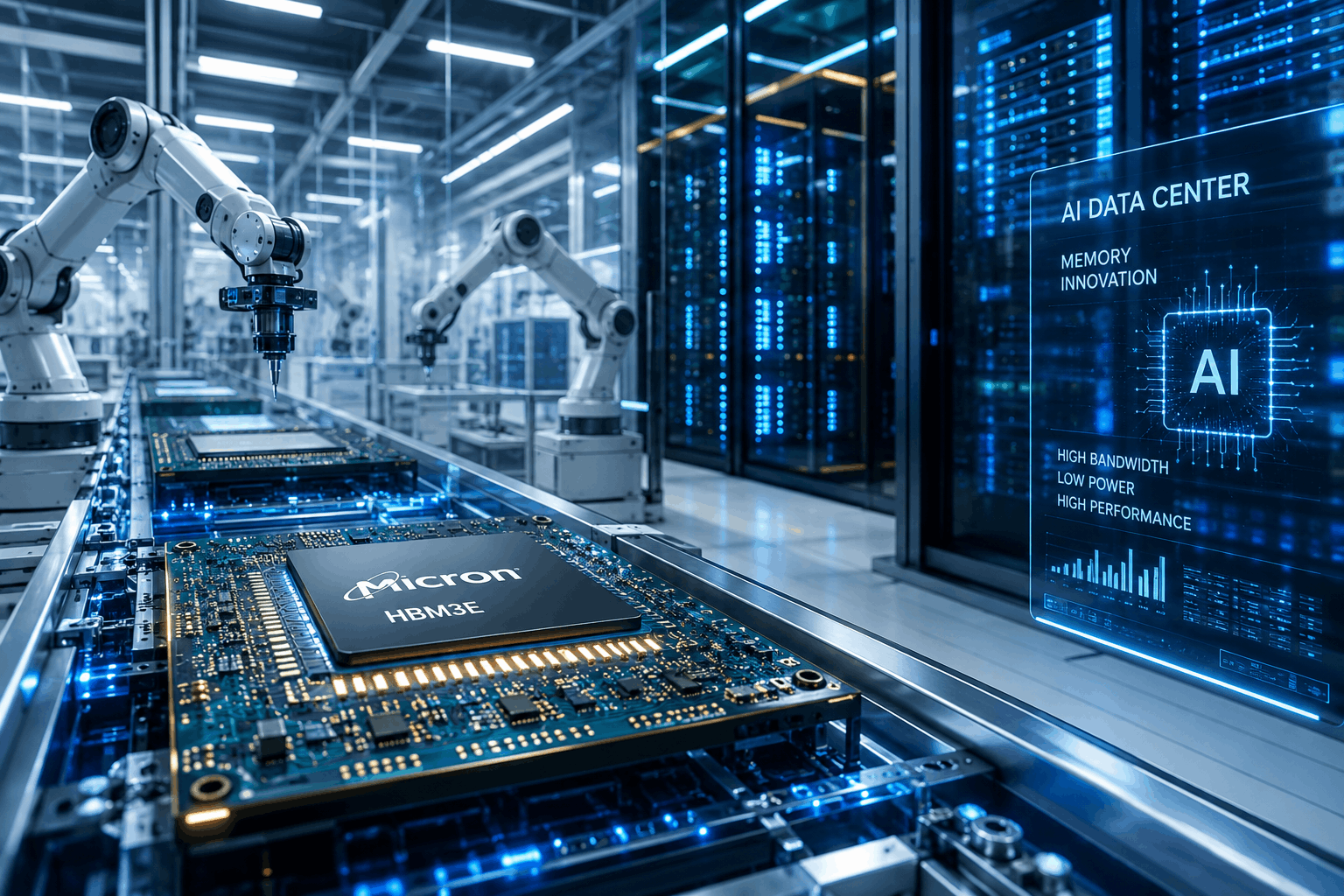
With the fast-growing trend of artificial intelligence technology, there has been a need for increased computer speeds and data processing abilities along with improved methods of storage. Memory technology is one of the key technologies behind the current changes because it allows AI systems to handle huge volumes of data instantly.
There are several companies involved in this shift and Micron Technology can be considered one of the leading ones in the sphere of semiconductors in the world. With the rapid growth of the use of AI, Micron helps to make data centers and devices work.
The Foundation of Modern Computing
While memory technology gets less recognition compared to processors and graphics cards, it is just as critical in terms of setting up performance standards. All AI models, cloud computing platforms, and enterprise applications utilize memory technology for storing and retrieving data.
With artificial intelligence becoming the primary focus of investments made by many firms today, traditional forms of memory technology are simply not enough to support such a level of workload. Generative AI requires large amounts of bandwidth and low latency when accessing data.
This change created numerous prospects for companies dealing with cutting-edge memory technology.
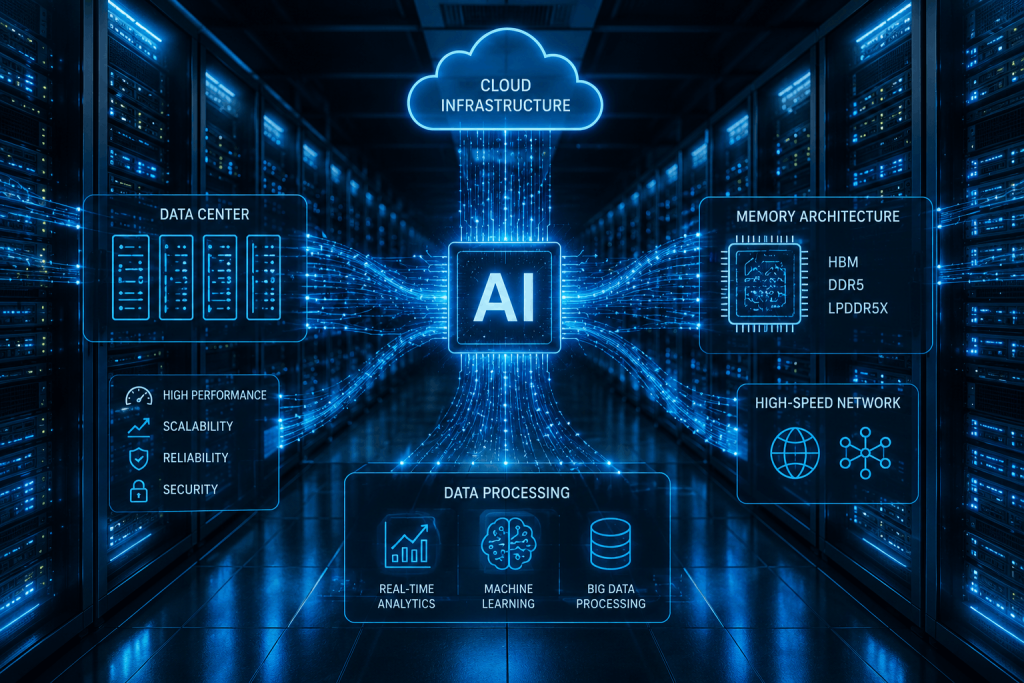
Why AI Is Fueling Demand for Advanced Memory
These AI application programs operate with huge volumes of data all the time. Either during the training of large-scale AI or real-time inference, these systems should transfer enormous quantities of data between the processor and the memory.
There are several trends increasing the need for advanced memory technology:
AI Data Centers
The current generation of AI data centers is based on GPUs and other accelerators requiring high-speed memory for providing the best performance. With the development of more complex AI models, memory will become an important component of system efficiency.
Cloud Computing Growth
Cloud service providers keep adding capacities for supporting AI services, machine learning applications, and enterprise applications. This means an increase in needs not only for memory but also for storage technologies.
Edge AI and Smart Devices
AI capabilities become available not only in data centers but also in smartphones, laptops, self-driving cars, and Internet-of-Things devices. These AI-based applications need fast and efficient memory.
Micron’s Strategic Position in the Semiconductor Industry
Micron Technology is a well-known company that became the world’s leader in the development of memory and storage solutions owing to the constant investments in research and manufacturing.
The company is engaged in the development of such technologies as:
- Dynamic Random Access Memory (DRAM)
- NAND Flash Storage
- High Bandwidth Memory (HBM)
- Solid-State Drive (SSD) Solutions
These technologies are used in various industries, among which cloud computing, automotive, industrial applications, consumer electronic devices, and enterprise solutions.
With the growing number of AI workloads, the demand for high-end memory products became the major growth driver of the semiconductor industry.
High Bandwidth Memory: A Critical AI Enabler
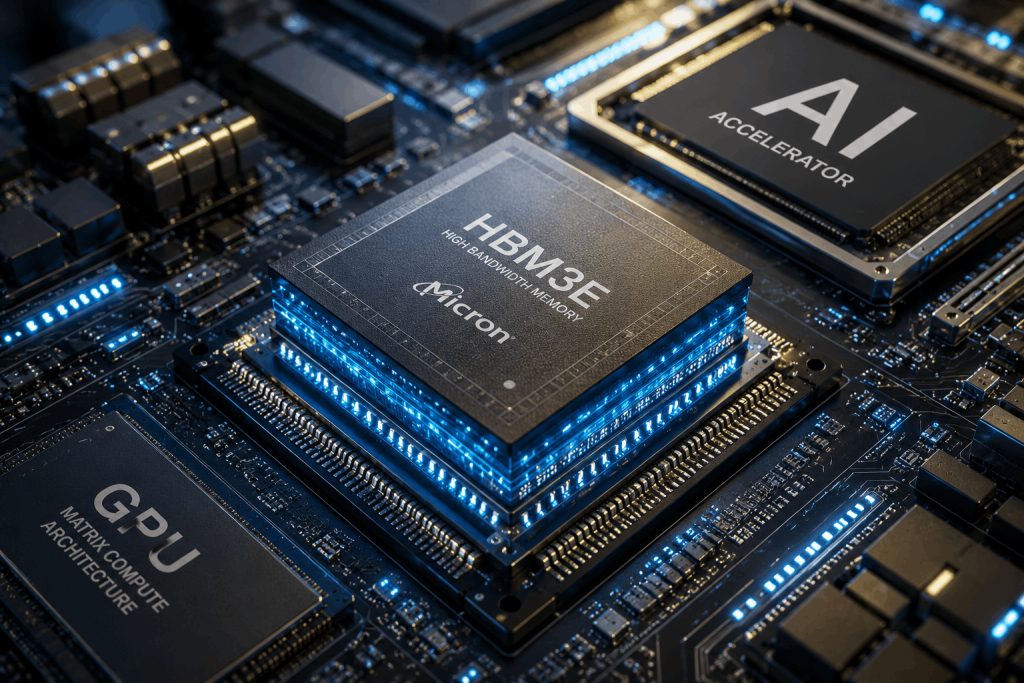
Some of the key advancements in hardware for artificial intelligence include High Bandwidth Memory (HBM). While standard memory systems provide lower data transfer speed, HBM provides higher speed along with energy efficiency.
Such memory system becomes extremely helpful in applications like:
- Training of AI models
- Inference for machine learning tasks
- High Performance Computing
- Scientific simulations
- Analytics
It allows the processor/accelerator to have better access to the data, thus reducing any possible bottlenecks in the performance.
As the investments in AI infrastructure keep increasing globally, HBM will become one of the major parts of the next generation of computers.
Beyond Data Centers: Opportunities Across Industries
Whereas AI data centers form one of the most promising fields for growth, advances in memory technologies have also brought significant changes in many other industries.
Personal Computing
AI-equipped laptops and desktop computers need more powerful memory technologies that will allow for performing AI computations and content creation directly from devices.
Automotive Industry
Advanced driver assistance and autonomous cars increasingly rely on artificial intelligence, thus, the need for more efficient memory systems increases.
Industrial Automation
Many factories and industrial plants are employing AI-based systems to increase efficiency, maintenance, and control.
Mobile Technology
Advances in smartphones keep incorporating new AI capabilities, thus creating an increased demand for memory technologies that are efficient and energy-saving.
Challenges and Market Competition
Semiconductor firms continue to be highly competitive and capital-intensive. They have to continuously make investment in technology and research for them to stay competitive.
The challenges that arise are:
- Complex global supply chains
- Technological changes
- Manufacturing costs
- Demand variations
- Geopolitical uncertainties
Even with all these challenges, there are huge opportunities for memory companies due to demand for AI infrastructure in the long run.
What the Future Holds
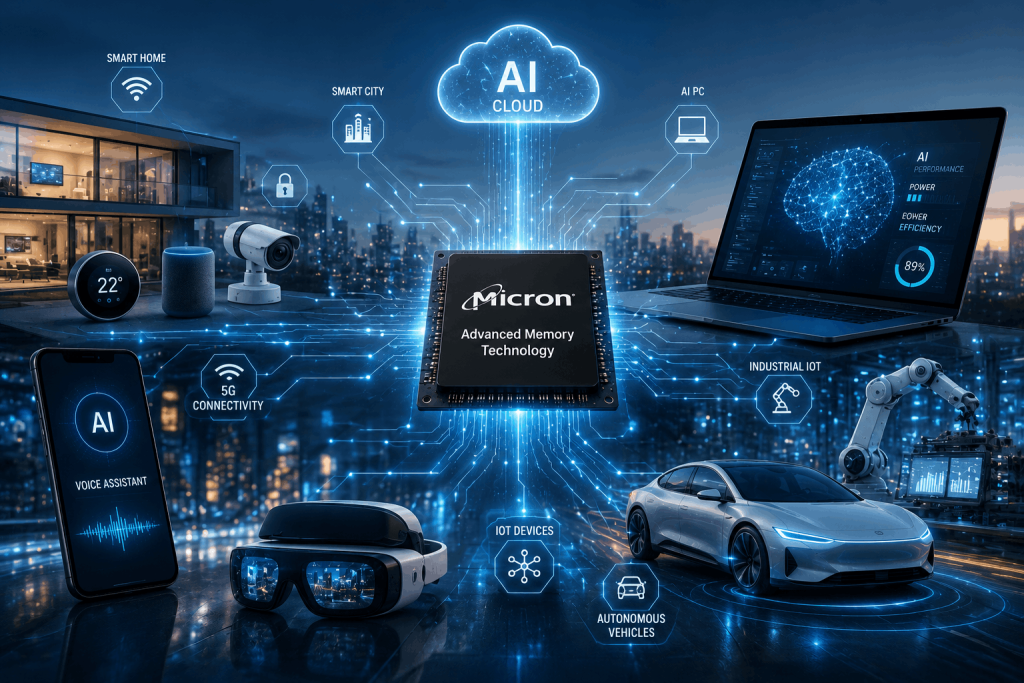
The next stage of AI development may be associated with additional growth in the need for computing and memory performance. The development of new technologies, such as agentic AI, autonomy, digital twin, and advanced robotics, will lead to additional demand for advanced memory technology.
Analysts predict the continuation of investments in AI infrastructure, cloud computing, and intelligent devices in the upcoming years. While companies will strive for speed and efficiency of computing systems, memory technology will continue to play an important part in the innovations.
Thus, the current situation provides many opportunities for the further development of Micron Technology as the key player in the development of the future of artificial intelligence.
Final Thoughts
AI technologies are impacting the way companies work, the way people use technologies, and industries innovate. Every significant achievement in artificial intelligence requires an essential element – fast and scalable memory.
With the growing need for AI technology, memory technology is going to be one of the leading segments in the semiconductor market. Companies that can provide top-notch products in the market will be influential in the development of the future of computing.
Innovations in memory technologies by Micron Technology make it one of the essential companies in this area.