
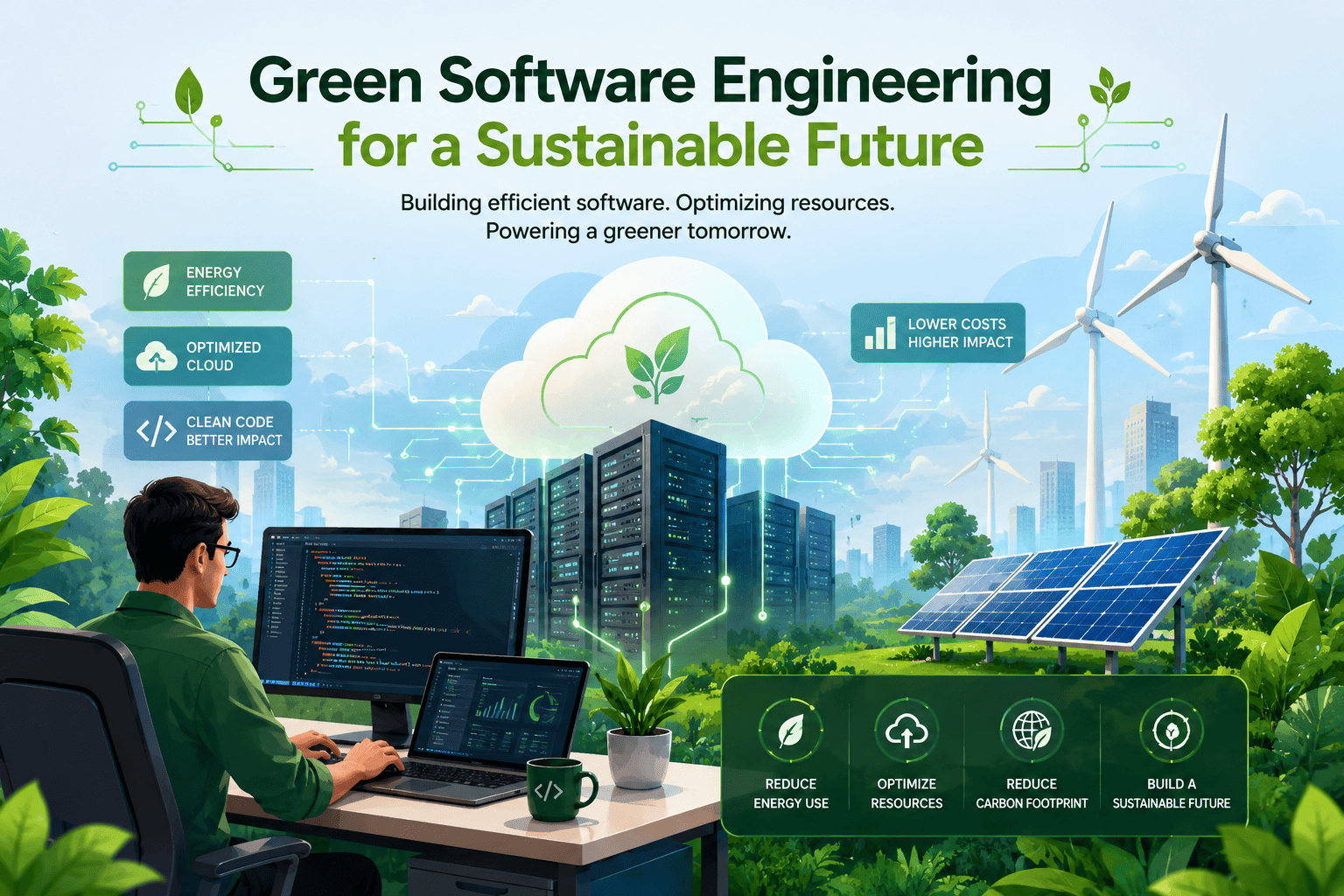
As the digital transformation initiatives become more prevalent among businesses today, sustainability becomes one of the most important aspects of technology decision-making process. While companies are still prioritizing innovation, effectiveness, and scalability of their IT solutions, they are now also considering their environmental impact and contribution to sustainability. This leads to the emergence of Green Software Engineering – a new approach to software creation, deployment, and maintenance which concentrates on energy saving.
There is no doubt that cloud computing, data centers, application development, and software maintenance make a substantial part of global energy consumption. In order to balance their growth, organizations strive to find some strategies that would allow them to combine their technological needs with their responsibility towards environment. That is where the Green Software Engineering can be helpful.
Apart from environmental advantages, sustainable software development helps businesses to save money on operations, increase the efficiency of their systems, and improve scalability. It also aligns better with ESG goals, which makes Green Software Engineering increasingly popular nowadays.
Understanding Green Software Engineering
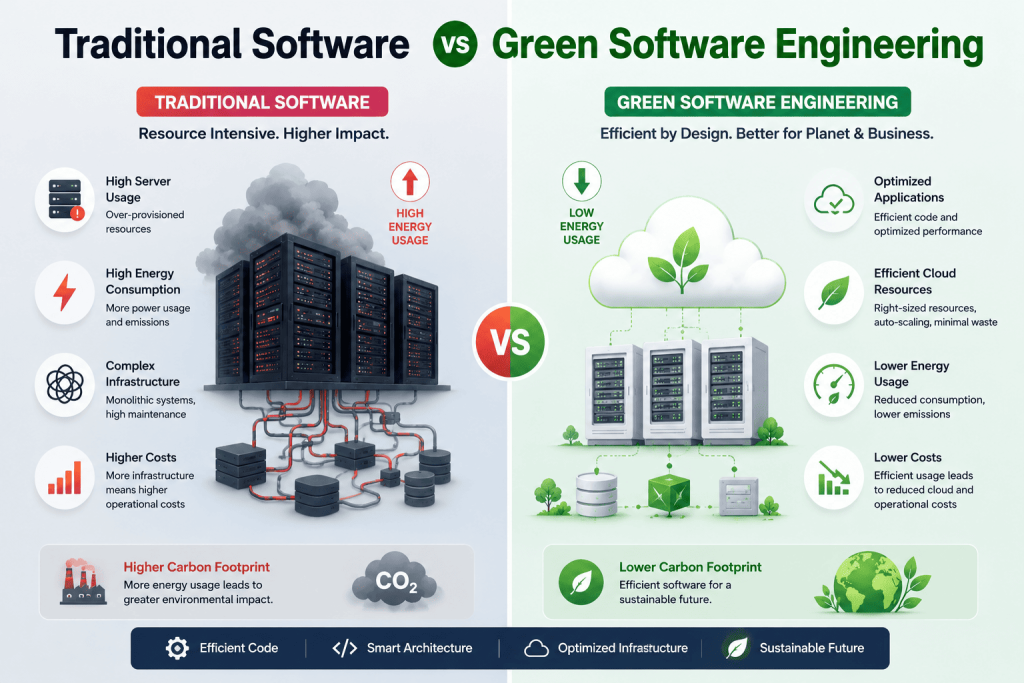
Green Software Engineering entails the design and development of software that utilizes minimal amounts of energy and hence reduces the carbon footprint involved in the digital world. High-performing software with efficient utilization of computing power is the desired result.
In contrast to hardware efficiency concerns, Green Software Engineering looks into software efficiency. Software designers and technology experts consider the effect of the software in terms of energy utilization at every stage of software development.
Key principles include:
- Writing efficient and optimized code
- Reducing unnecessary data processing
- Optimizing cloud resource allocation
- Minimizing storage and network consumption
- Designing scalable and sustainable architectures
- Monitoring software energy consumption
These practices help organizations create technology solutions that support both business growth and sustainability objectives.
Why Sustainability Is Becoming a Technology Priority
Rapid development of cloud computing, artificial intelligence, big data, and connectivity has led to an increase in global energy needs. Data centers, infrastructure, and digital services need a lot of computational power and therefore are associated with high energy usage.
There are several reasons why organizations are considering sustainable technology solutions:
Regulatory and Compliance Requirements
Governments and regulatory bodies are introducing stricter sustainability reporting requirements. Businesses are increasingly expected to measure and reduce their environmental impact.
Investor Expectations
Today, more investors take into consideration the ESG results of companies while making investment decisions. Sustainability initiatives will help you build your company’s reputation and create investment opportunities.
Customer Preferences
Contemporary consumers tend to choose brands that care about ecology. Therefore, sustainable practices can contribute to building better relationships with customers.
Cost Optimization
More efficient software usually needs less computation power and therefore is cheaper.
How Green Software Engineering Supports Sustainable Technology Strategy
Resource Efficiency Enhancement
Efficient software requires fewer processing cycles, thus putting less burden on servers and cloud environments. Efficient applications accomplish their tasks but utilize less energy in doing so.
Reducing Cloud Costs
The operation of the cloud platform is based on the pay-per-use model. Thus, efficient applications are likely to cost less in terms of infrastructure costs.
Enhancing System Performance
The Green Software Engineering methodology promotes getting rid of unneeded processes and workflow optimization. This often leads to better performance of the application.
Supporting ESG Objectives
Many organizations have established sustainability goals as part of their corporate strategy. Green software practices contribute directly to environmental targets and sustainability reporting initiatives.
Extending Infrastructure Lifecycles
Efficient applications place less strain on hardware and infrastructure resources, helping organizations maximize the value of their technology investments.
Key Green Software Engineering Practices
Optimize Application Performance
Efforts to reduce inefficient coding and avoid unnecessary calculations and improve responsiveness of applications will contribute greatly to reduced energy use.
Adopt Cloud Optimization Strategies
Enterprises need to always monitor their cloud workloads and delete any unnecessary resources. Workload optimization and auto-scaling will aid in reducing waste and retaining good performance.
Design Energy-Efficient Architectures
Modern architectures such as microservices and serverless computing allow organizations to allocate resources more efficiently based on demand.
Minimize Data Storage Requirements
Unnecessary storage of excess data requires more energy. Good data management will reduce energy required for data storage.
Monitor Sustainability Metrics
It is important for companies to measure energy efficiency, infrastructural efficiency, and resource utilization.
The Business Benefits of Green Software Engineering
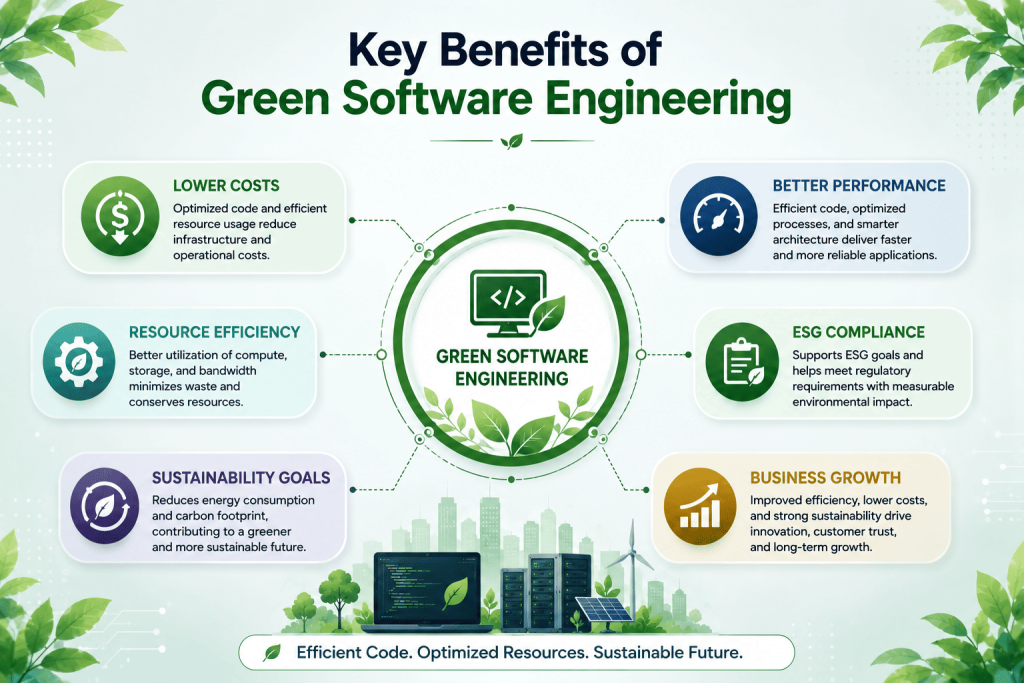
Organizations that integrate sustainability into their technology strategy can realize several long-term advantages:
- Lower operational and cloud infrastructure costs
- Improved application performance and reliability
- Enhanced scalability and resource utilization
- Stronger ESG and sustainability performance
- Better regulatory compliance
- Increased customer and investor confidence
- Future-ready technology infrastructure
By combining sustainability objectives with technology innovation, businesses can create a competitive advantage while reducing environmental impact.
The Future of Sustainable Software Development
With sustainability becoming a key strategy, there is no doubt that Green Software Engineering will become more relevant in the process of digital transformation. These emerging trends such as carbon-aware computing, sustainable cloud infrastructure, AI-powered optimization, and efficient application design will define the future of software engineering.
Companies adopting these approaches now will be able to adapt to new regulations and attain sustainability objectives while developing their digital ecosystems for future growth.
Conclusion
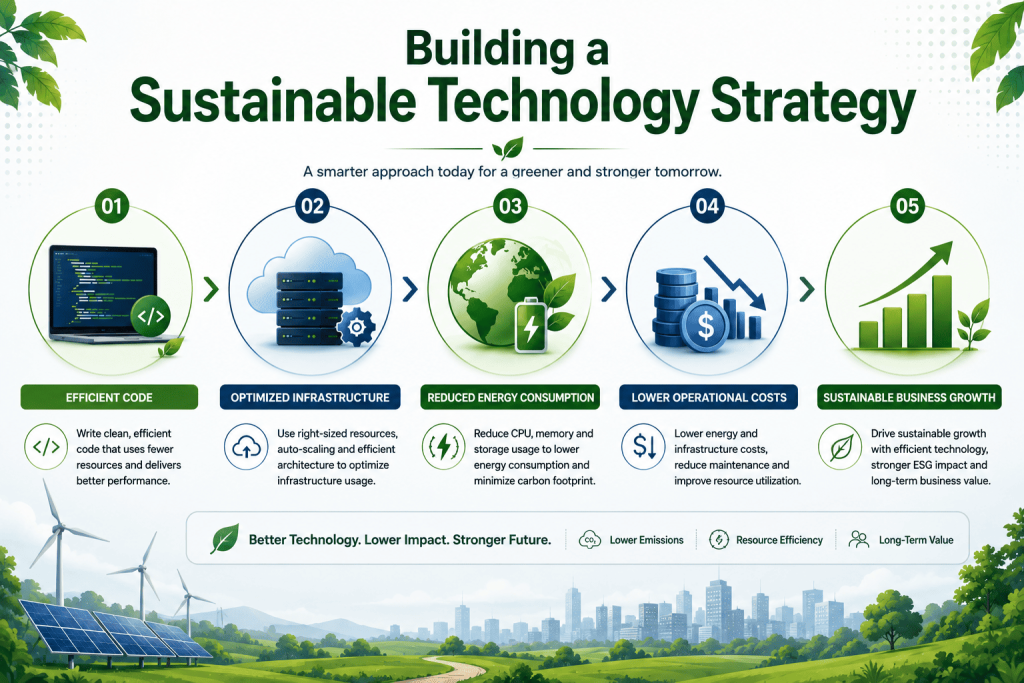
Green Software Engineering has come a long way from being an environmental concern and now stands as a viable business solution that assists companies in becoming more efficient, economical, performant, and sustainable.
With technology playing an increasing role in business innovations, it is not only important to consider the functionality of your software but also its efficiency. With the adoption of sustainable software development, it is possible to create technology that brings benefits not only to users but also to the organization and environment at large.