

Introduction
In the modern age of technology, companies are always looking for ways to differentiate themselves, improve their operational efficiencies, and provide better customer services. However, ready-made software may not always be able to meet the specific requirements of your company.
This is when the idea of custom software development takes center stage.
However, how does custom software development affect your organization? Is it worth investing in such software, or should you consider other options?
Here, let us understand it in a more practical manner.
What Is Custom Software Development?
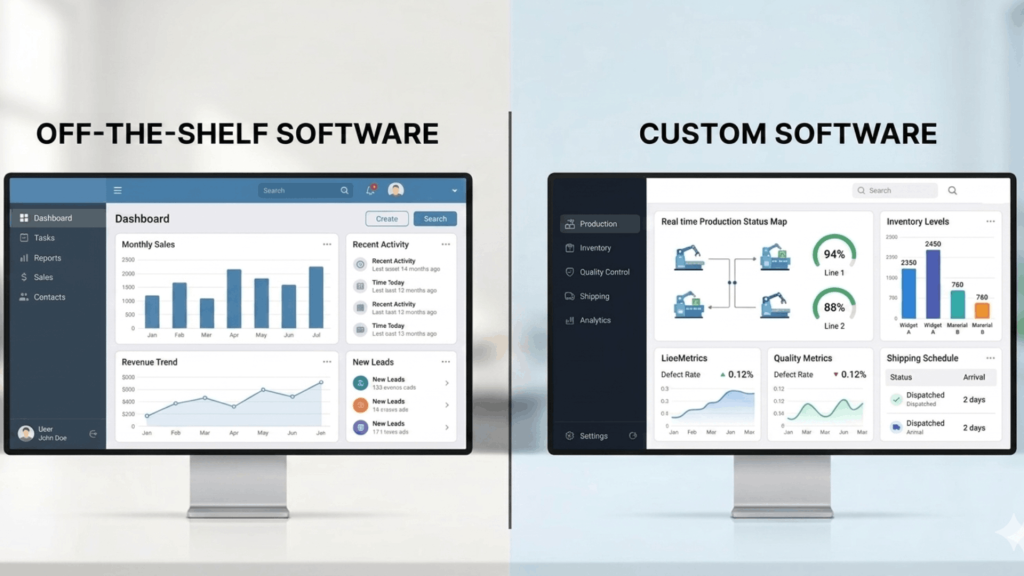
Custom software development involves creating a bespoke application that suits your business requirements.
Here’s how custom software solutions differ from off-the-shelf alternatives:
- They are created from scratch
- They are built according to your processes
- They are scalable along with your business
Consider the following analogy:
Off-the-shelf software = renting an apartment
Custom software = buying land and constructing a house
Why Businesses Are Moving Toward Custom Solutions

1. Your Business is Unique ,Why Not Your Software?
Standard solutions aim at broad application. This inevitably involves sacrifices.
When using custom software, you will enjoy:
- The functionality required by your business
- No extra bloatware
- More consistency with your operations
2. Unrestricted Scalability
As your company expands, so should your software.
Custom software allows you to:
- Introduce new features whenever necessary
- Scale to higher number of users and volumes of data
- Respond promptly to shifts in the market
3. Integration with Other Applications
Most companies use various applications such as CRMs, financial applications, etc.
Custom software will:
- Enable flawless integration
- Save on manual labor
- Increase data flow between departments
4. Security
As cybercrimes are becoming increasingly common, security is essential.
Custom software provides:
- Specific security measures
- Control over data
- More security than popular software
When Do You Need Custom Software for Your Business?
You may need to develop custom software if:
- You rely on manual processes
- Current tools aren’t sufficient
- You are growing quickly
- You aim to have an advantage over your competitors
- You are developing a proprietary product (e.g., a SaaS platform or application)
Real-World Examples
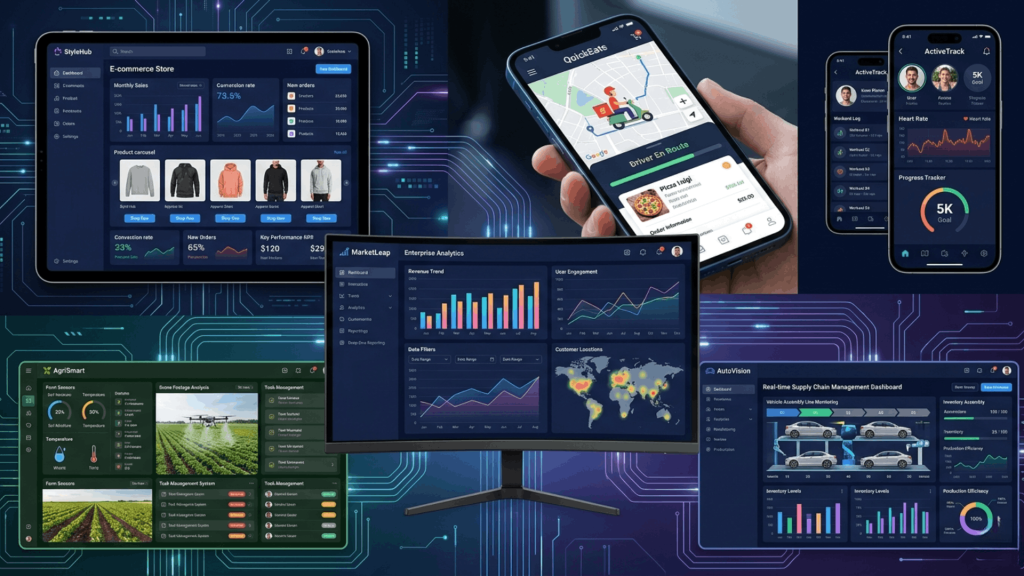
🛒 E-commerce Website
A newly emerging e-commerce website might require:
- Custom inventory management system
- Recommendation engines
- Analytics platform
🍔 Food Delivery Website
Startups and restaurants would require:
- Real-time order tracking
- Vendors dashboard
- Customer engagement modules
🏢 Enterprise Applications
A large enterprise could need:
- Automated workflow platforms
- Reporting dashboards
- Management systems
Custom Software vs Off-the-Shelf Software
| Feature | Custom Software | Off-the-Shelf Software |
|---|---|---|
| Flexibility | High | Limited |
| Cost (Initial) | Higher | Lower |
| Scalability | Unlimited | Restricted |
| Maintenance | Controlled by you | Controlled by vendor |
| Competitive Advantage | Strong | Minimal |
Challenges to Ponder
Even custom software isn’t without its difficulties. Some facts include:
- Higher initial expense
- Time required to develop
- Requirement for the right development partner
However, in the end, the return on investment usually tips the scale.
How to Get Started
If you’re thinking about custom software:
Step 1: Figure out what you need
Know what issues you have to solve.
Step 2: Find the right development partner
Find one who:
- Has experience
- Has good projects in the portfolio
- Communicates transparently
Step 3: Begin with small steps
Build an MVP (Minimum Viable Product) first, then expand.
Conclusion
Creating custom software is not only a matter of developing software; it is about creating solutions that fit well into your strategy.
If performed correctly, it may result in:
- Efficiency
- Customer satisfaction
- Growing profits
Custom software may be your trump card among competitors.