

Businesses need to be agile enough to cope up with the changing trends and requirements in today’s dynamic world. Software development practices that used to work in the past cannot cope with the new environment; thus, businesses face problems like inability to scale operations and lack of agility and innovation due to outdated practices.
Cloud-native applications represent the solution for these issues. Cloud-native applications can help businesses become innovative by adopting the latest technologies to deliver software services efficiently. Cloud native means using the benefits of modern technologies like microservices, containers, and automated processes to create better software products.
As organizations continue their digital transformation journeys, cloud-native applications are emerging as a key driver of business growth and long-term competitiveness.
What Are Cloud-Native Applications?
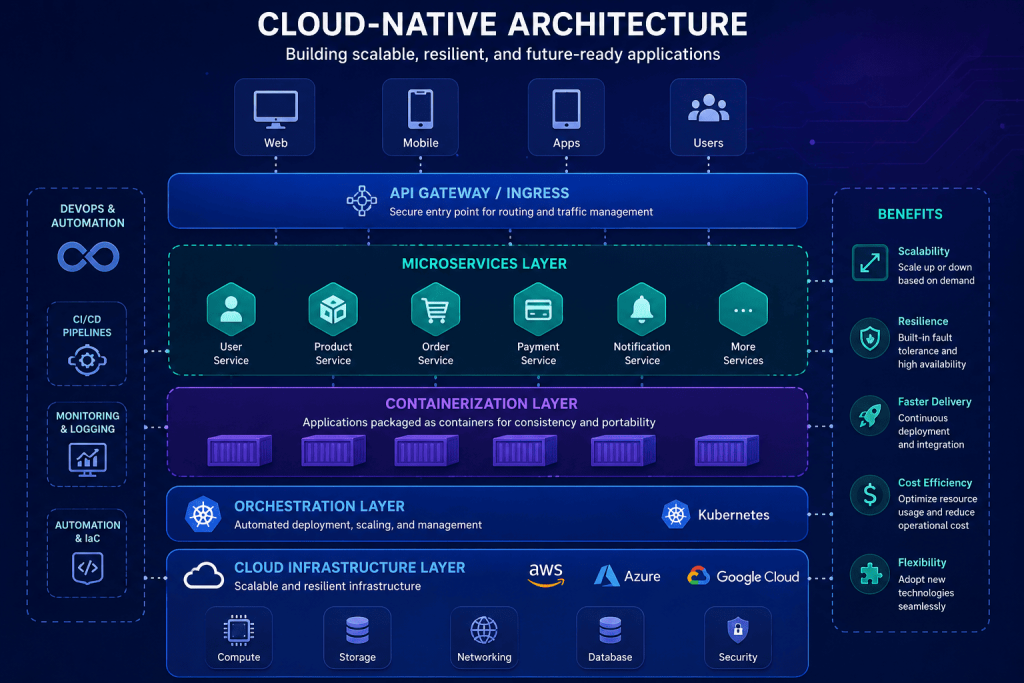
Cloud native apps are software applications that are purposely developed to run on cloud computing platforms. These differ from ordinary applications that have been modified for cloud computing as they are purpose-built to make full use of the advantages of the cloud computing environment.
These applications typically utilize:
- Microservices architecture
- Containerization technologies
- Continuous integration and continuous deployment (CI/CD)
- Automated scaling and monitoring
- Cloud-based infrastructure services
This modern approach enables businesses to develop, update, and scale applications more rapidly while maintaining reliability and performance.
Why Businesses Are Moving Toward Cloud-Native Development
Organizations have had to adapt to the growing need for speed and innovation by adopting cloud-native development practices. It is impossible to spend months waiting for software updates or upgrades to happen.
With cloud-native apps, organizations can be more flexible in dealing with market dynamics and new developments.
Faster Time-to-Market
Speed plays an extremely important role in today’s business world. The cloud-native approach makes it possible for teams to introduce new features, updates, and products more often.
Thanks to the automation processes and modular structure, any change can be done without affecting the whole system. This helps considerably reduce development time and make products ready sooner.
Improved Scalability
A growing business usually comes with more traffic, increased data storage, and other operational factors. Old-style applications are often unable to cope with this challenge successfully.
A cloud-native application will scale automatically based on demand. This way, even during the peak times of operations, the application will always respond quickly and work reliably.
This flexibility allows businesses to grow without wasting significant investments into hardware upgrades.
Enhanced Reliability and Performance
Application downtime may affect customer satisfaction and revenue generation. The cloud-based architecture is helpful in providing greater reliability in terms of distributing application tasks among different services and environment.
In the case of failure of any particular component, other services will remain unaffected. This will help prevent interruptions and increase system resilience.
Automation helps in improving the performance of applications.
Supporting Digital Transformation Initiatives
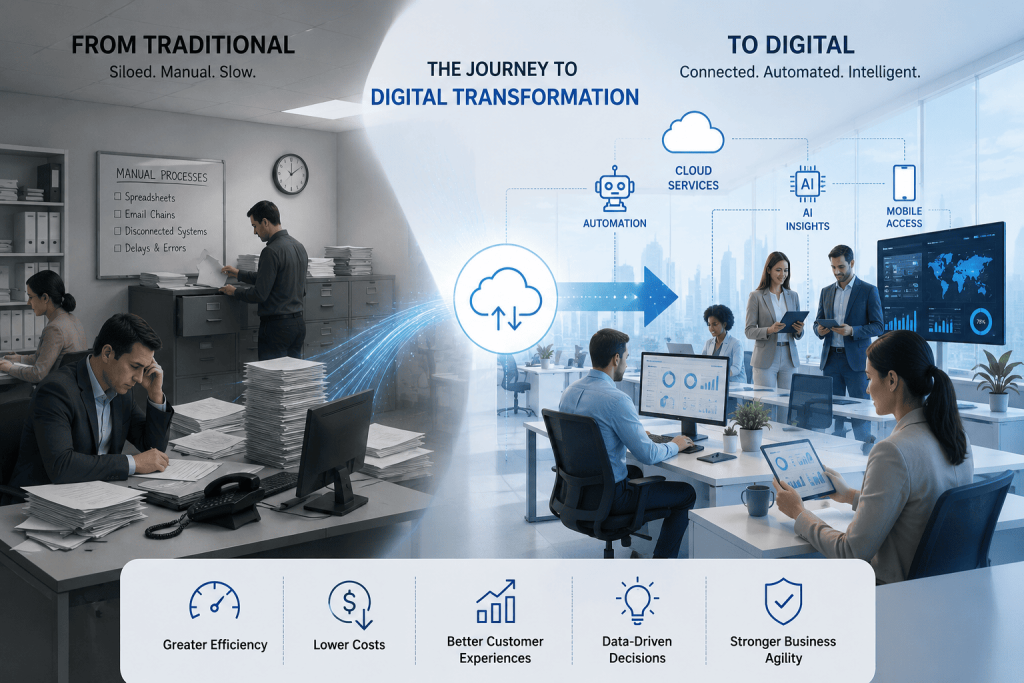
Digital transformation has been identified as a key strategy for companies across the globe. This is because companies are working hard to adopt technologies that help them be efficient and increase their revenue generation capabilities.
Cloud-native applications play a vital role in achieving these goals by enabling:
- Faster innovation
- Improved collaboration
- Greater operational efficiency
- Data-driven decision-making
- Seamless integration with emerging technologies
With the emergence of technologies such as AI, machine learning, IoT, and analytics, cloud-native applications provide the backbone.
Cost Efficiency and Resource Optimization
Traditional infrastructure management may be costly and time-consuming. Even when unused capacity is paid for, there may be capacity constraints in times of heavy traffic.
By using cloud-native applications, cost optimization becomes easier. Businesses will be able to access and use available resources only when they need them, scaling up or down when necessary.
Moreover, automation ensures that fewer maintenance tasks have to be done manually, which gives IT professionals the opportunity to focus on more strategic initiatives.
Better Customer Experiences
Customer expectations continue to rise across every industry. Users expect fast, reliable, and personalized digital experiences regardless of the device or platform they use.
Cloud-native applications enable businesses to deliver these experiences through:
- Faster application performance
- Continuous feature improvements
- Improved service availability
- Real-time data processing
- Personalized user interactions
By meeting customer expectations more effectively, organizations can increase satisfaction, retention, and long-term loyalty.
Strengthening Business Agility
Rapid adaptation is one of the features that make companies thrive. Cloud-based application development allows organizations to adapt swiftly to market shifts and competition.
Testing innovative ideas and applying updates is much easier for the developers, which creates favorable conditions for innovation, since risks are reduced significantly compared to traditional methods of software development.
Consequently, an organization will be able to capitalize on opportunities more effectively and maintain its competitive advantage.
The Future of Cloud-Native Applications
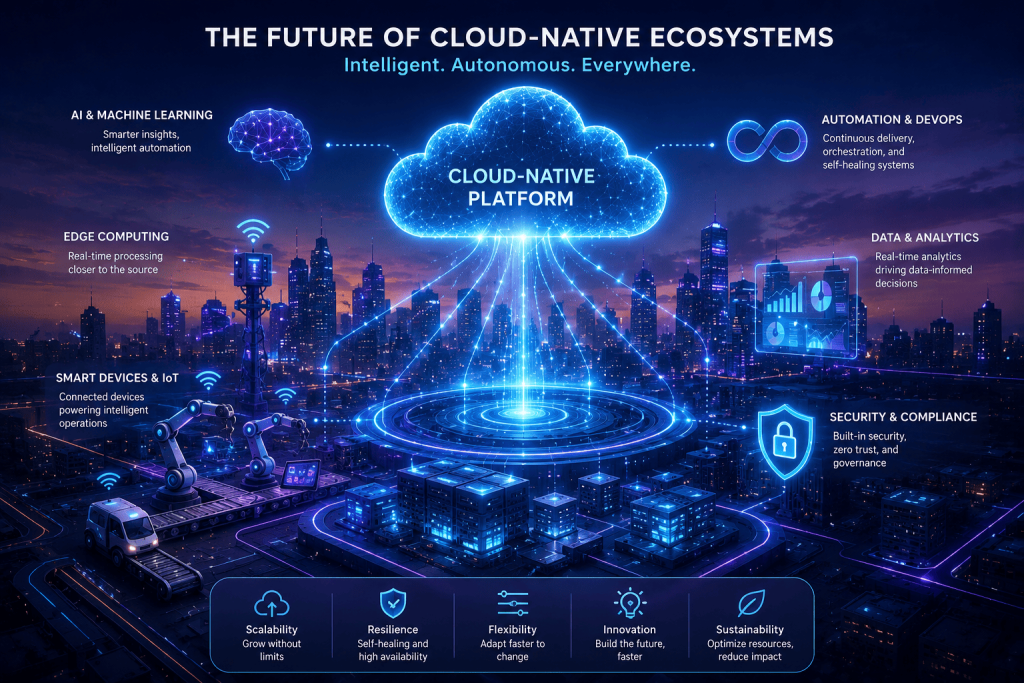
The implementation of cloud-native systems continues to grow rapidly as companies realize their potential benefits. Serverless computing, edge computing, AI automation, and multi-cloud platforms have become new trends in cloud-native systems.
Organizations implementing cloud-native systems now can make sure that in the future, they will be able to benefit from new developments in technology while remaining scalable and efficient.
With digital transformation becoming the norm, cloud-native applications will be the cornerstone of future business solutions.
Conclusion
Cloud-native apps have evolved from being merely the flavor of the season to becoming an integral part of a modern company’s strategy. Cloud-native applications are able to provide scalability, agility, reliability, and cost savings, thus making them an effective force behind sustainable growth.
For companies that wish to foster innovation, enhance customer experience, and stay ahead in a highly digitalized environment, it might be beneficial to adopt cloud-native software. Such software would ensure long-term success by creating future-proof applications.