

Blockchain technology is no more just linked to cryptocurrencies. It has matured into becoming a significant disruptor in almost all industries. The secure, transparent, and decentralized platform offers efficient solutions for data and transactions management, helping companies across the globe leverage its benefits for improving their efficiency, eliminating fraud, and building trust.
With digital transformation becoming a priority for most businesses, blockchain technology has become one of the main forces driving innovations. Understanding the current trends, uses, and possibilities associated with it may be beneficial for your business.
What Is Blockchain Technology?
Blockchain is a digital ledger technology that keeps track of all transactions in a decentralized manner across multiple computing systems. Unlike traditional systems that involve the use of centralized databases, blockchain involves a network through which all participants have access to the transaction record.
A blockchain system records information in a block, and multiple blocks are connected to each other in a chronological order. The addition of information to the blockchain makes it hard to change the information recorded, making the data highly secure.
Key Features of Blockchain Technology
- Decentralized
- Transparent
- Immutable
- Improved Security
- Trackable
- Automated Smart Contracts
These features make blockchain a powerful solution for industries requiring secure and verifiable records.
How Blockchain Works
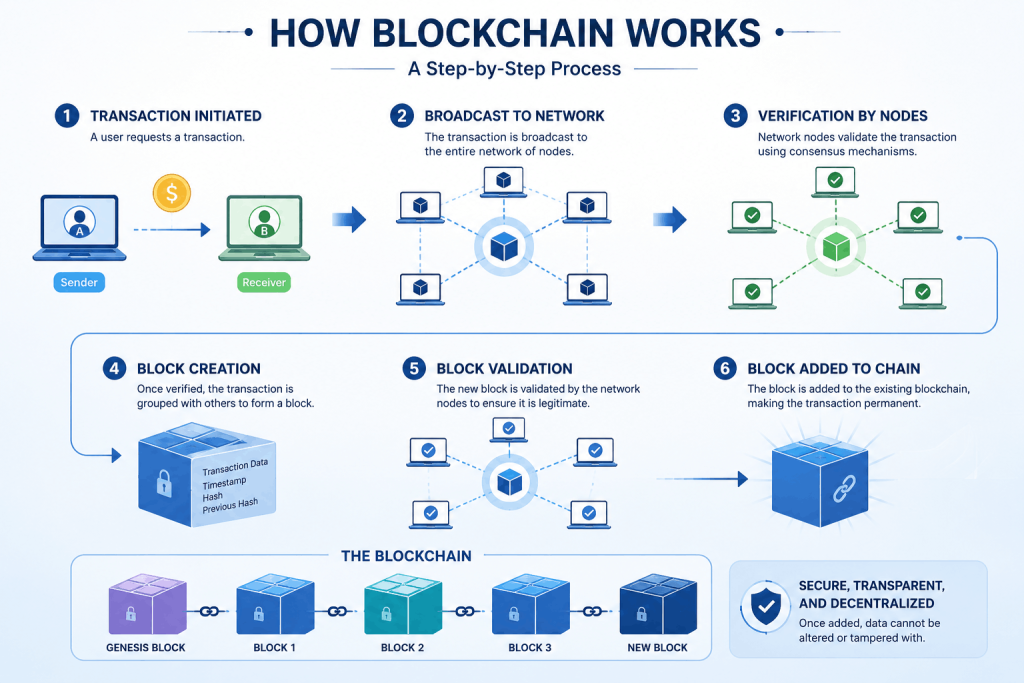
Blockchain works in the following ways:
- Transaction is made.
- Transaction is sent over a network of computer nodes.
- Nodes validate the transaction.
- Verified transaction is included in a new block.
- The new block is connected with other blocks in the chain.
- Updated ledger is shared with all computers in the network.
In this way, intermediaries can be completely removed.
Latest Blockchain Technology Trends
Several important trends characterize the current blockchain environment.
Firstly, organizations actively integrate blockchain-based solutions into their operations to increase efficiency, improve transparency, and cut costs. Private and consortium blockchains offer businesses better options for secure transactions and data exchanges.
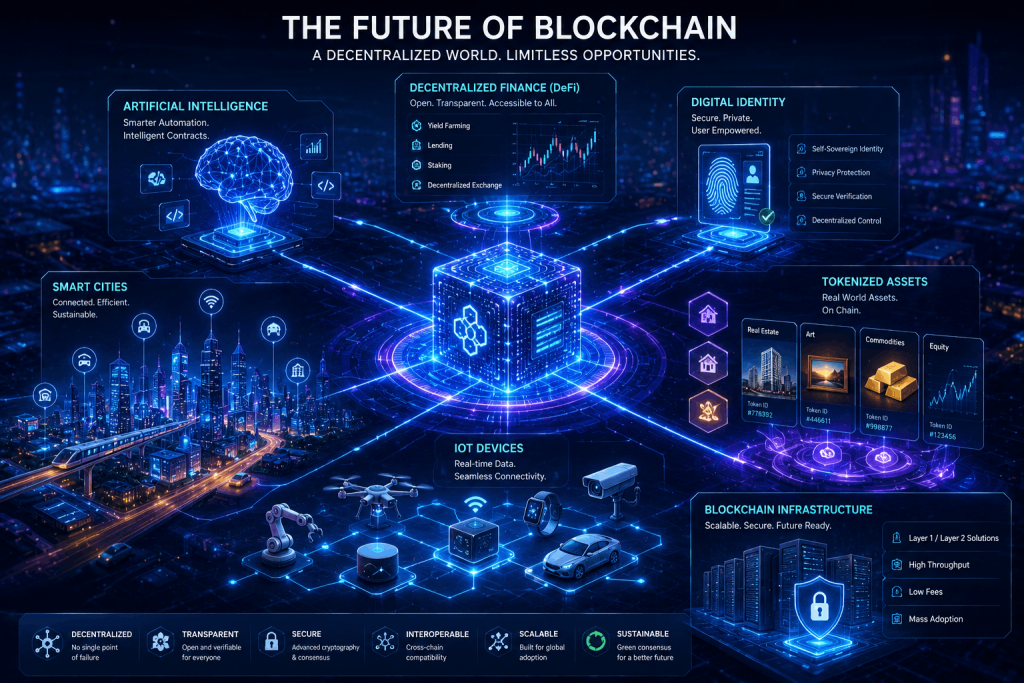
Secondly, tokenization is gaining momentum as a trend in the blockchain landscape. Physical objects (e.g., artworks, real estate, financial assets, and other valuables) get represented in digital form on blockchain technology.
Thirdly, blockchain technology and artificial intelligence are two complementary approaches that are being integrated into applications. Machine learning algorithms help analyze data volumes efficiently; meanwhile, blockchain technology guarantees integrity and transparency of the analyzed information.
Fourthly, digital identity solutions based on blockchain are becoming more popular. Currently, digital identities pose one of the biggest challenges in the world since people need ways to verify their identities without resorting to centralized identity management services.
Fifthly, the growing concern about environmental sustainability gives rise to green and sustainable blockchain solutions that employ energy-efficient consensus algorithms to minimize negative impacts on the environment.
Sixthly, supply chain solutions based on blockchain are also becoming common practice. Organizations use blockchain to monitor products throughout the supply chain process from production to shipment.
Real-World Applications of Blockchain Technology
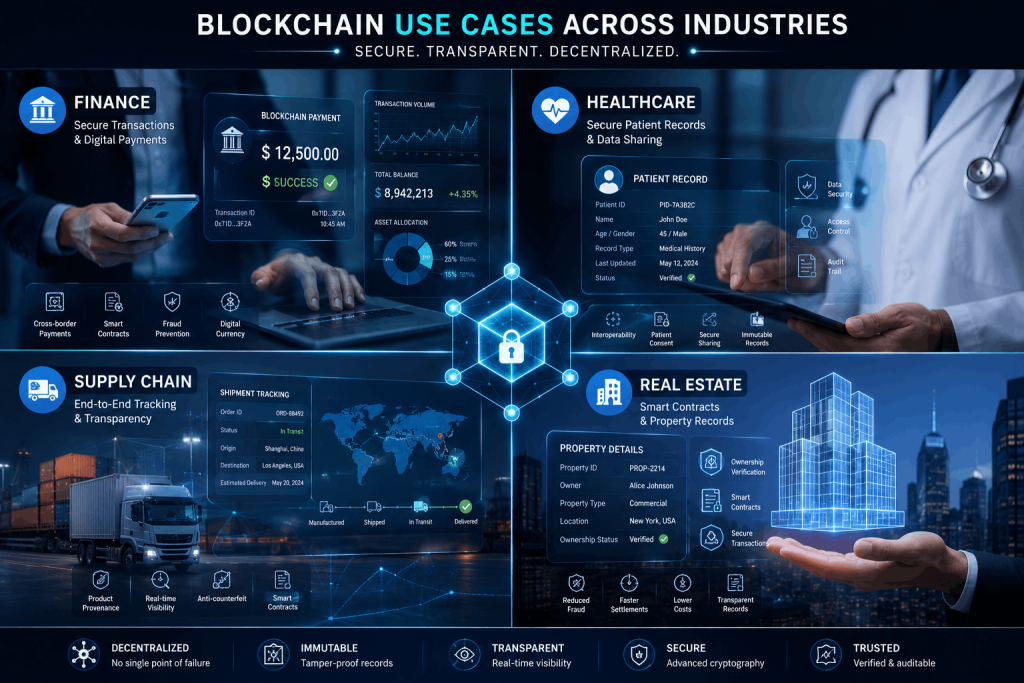
Financial Services
This is still among the industries where blockchain has been used extensively. These applications include:
- Cross-border payments
- Cryptocurrencies
- Smart contracts
- Fraud protection
- Asset management
With blockchain, the transactions become quicker and safer, with little need for intermediary involvement.
Healthcare
Hospitals and clinics use blockchain to ensure the privacy and integrity of patients’ records.
Some of the benefits include:
- Data security enhancement
- Accuracy in maintaining medical history
- Cost reduction
- Patient satisfaction improvement
Supply Chain Management
In this application of blockchain, every step that a product goes through gets recorded on a blockchain.
Advantages include:
- Product authenticity verification
- Reducing fraud
- Inventory management optimization
- Consumer confidence improvement
Real Estate
Using blockchain technology in the real estate industry helps in streamlining the transactions process.
Blockchain supports the following applications:
- Property transfer faster
- Reduction in transaction costs
- Increasing record accuracy
- Transparency increase
Government Services
Governments are looking into the use of blockchain for:
- Electronic voting
- Public records management
- Identity authentication
- Tax administration
Benefits of Blockchain Technology
Better Security
The technology relies on cryptography, which ensures that information is very secure from manipulation and breaches.
Increased Transparency
Information will be available to all parties who have the clearance to access it.
Higher Efficiency
With automation and the elimination of middlemen, there is an increase in efficiency.
Reduced Costs
Organizations can reduce extra charges by using decentralized systems and smart contracts.
Better Traceability
It makes it easy to trace assets due to a permanent record of all transactions made.
Challenges and Limitations
Despite the benefits, blockchain technology also has some problems.
Blockchain Scalability
Blockchain scalability issues can prevent networks from processing high transaction volumes efficiently.
Unclear Regulations
Governments throughout the world are still creating various regulations for the blockchain.
Implementation Complexity
The implementation of blockchain can be quite difficult technically.
Blockchain Adoption Problems
Organizations find it difficult to implement blockchain owing to cost concerns.
Blockchain vs Traditional Databases
| Feature | Blockchain | Traditional Database |
|---|
| Control | Decentralized | Centralized |
| Transparency | High | Limited |
| Security | Strong Cryptographic Protection | Depends on Central Authority |
| Data Modification | Difficult | Easily Modified |
| Trust Model | Distributed Trust | Centralized Trust |
While traditional databases remain suitable for many applications, blockchain offers unique advantages where transparency, security, and trust are critical.
Future Opportunities for Blockchain Technology
But there is far more on the horizon for the blockchain than just cryptocurrencies. New prospects for blockchain technology include:
Digital Identity Systems
Blockchain IDs would enable streamlined authentication while also ensuring greater security and privacy.
Decentralized Finance (DeFi)
There have been new developments in DeFi that allow for additional financial products without central authorities.
Smart Cities
Blockchain will help manage information transfer between interconnected devices, infrastructure, and public utilities.
Protection of Intellectual Property
Authors can leverage blockchain technology to establish their intellectual property rights.
Blockchain-Based Healthcare
A blockchain-driven healthcare system can result in better care thanks to effective data management.
Global Trade and Logistics
Blockchain can optimize global trade by making processes faster and easier.
Conclusion
Use up and down arrow keys to resize the meta box pane.
The development of blockchain technology has led to changes in how corporations conduct their business in terms of data management and transactions. Its security, transparency, and decentralization capabilities make blockchain technology one of the most revolutionary technologies of recent years.
Use up and down arrow keys to resize the meta box pane.
With ongoing trends such as tokenization, decentralized identity, AI integration, and sustainable blockchain solutions, companies can find even greater benefits in the future by embracing blockchain technology. Despite existing challenges, the potential of blockchain remains substantial; moreover, its adoption continues to grow across industries. As a result, businesses are discovering new opportunities to improve security, transparency, and operational efficiency.