
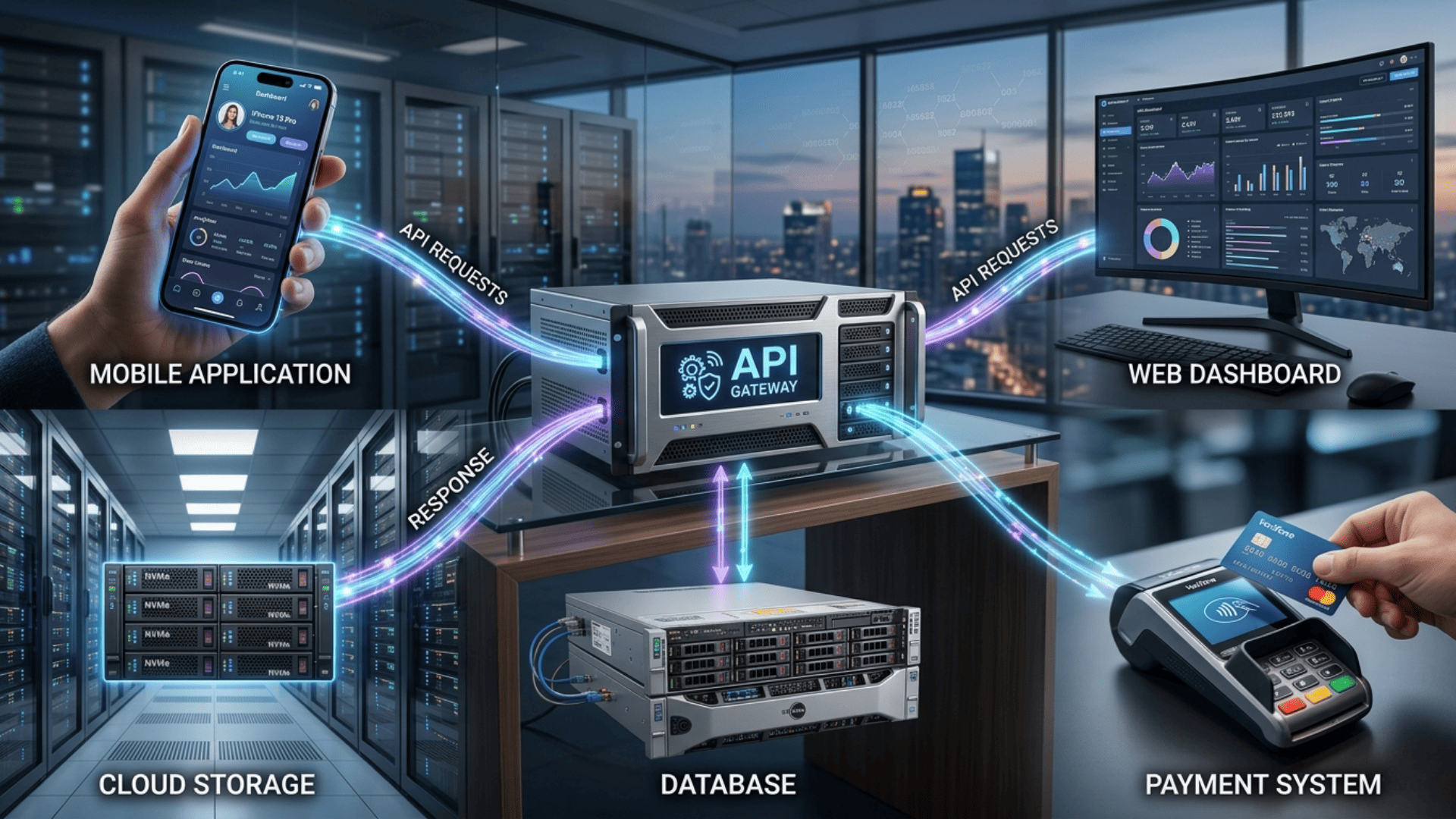
In the current dynamic environment, companies use various kinds of software applications such as web applications, mobile applications, payment gateways, CRM software applications, among others. These software applications serve different purposes in companies however; the true value is achieved when all these applications can work seamlessly together as one.
The process of integrating software applications through APIs is referred to as API integration. It involves enabling communication and data sharing between applications so that they work as one. Without understanding API integration and its importance, it will be difficult to integrate different applications.
What Is API Integration?
An API (Application Programming Interface)is a set of protocols and conventions that allow two pieces of software to connect to each other. It describes how the request and response should look so that two applications could work together and share their information.
API integration is the process of connecting two or more applications using APIs so they can communicate and automate tasks without human involvement.
Simple Example
When you search for flights on any booking website, it may retrieve information from different websites and payment systems via APIs. In just a couple of seconds, you get all the information regarding the prices, availability, and booking.
How API Integration Works
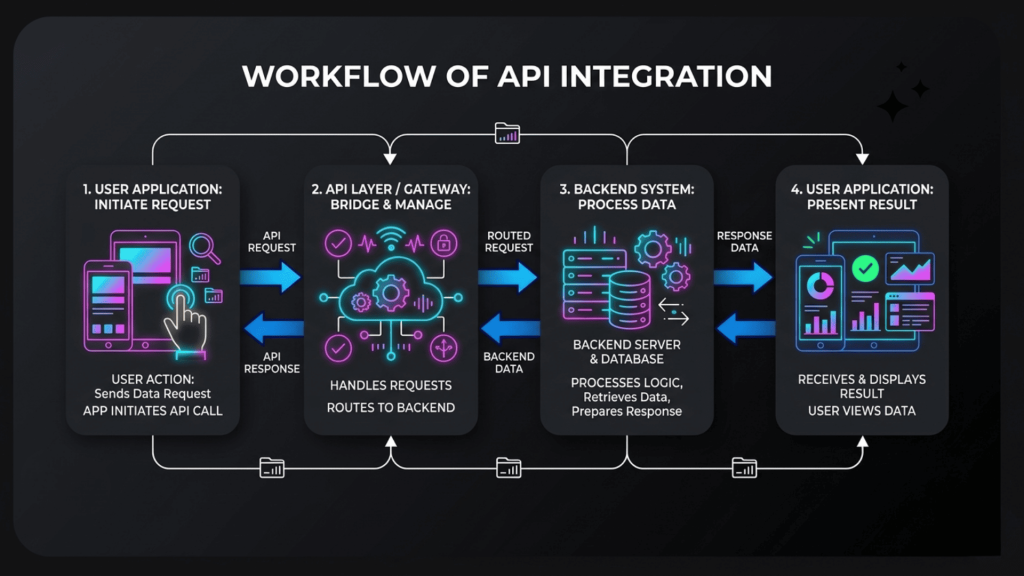
At its core, API integration follows a request-response model:
- An application sends a request to another system through an API
- The receiving system processes the request based on predefined rules
- A response is generated and sent back with relevant data
- The original application uses that data to complete an action or display information
All this takes place in real time, thus enabling users to experience seamless interaction with applications.
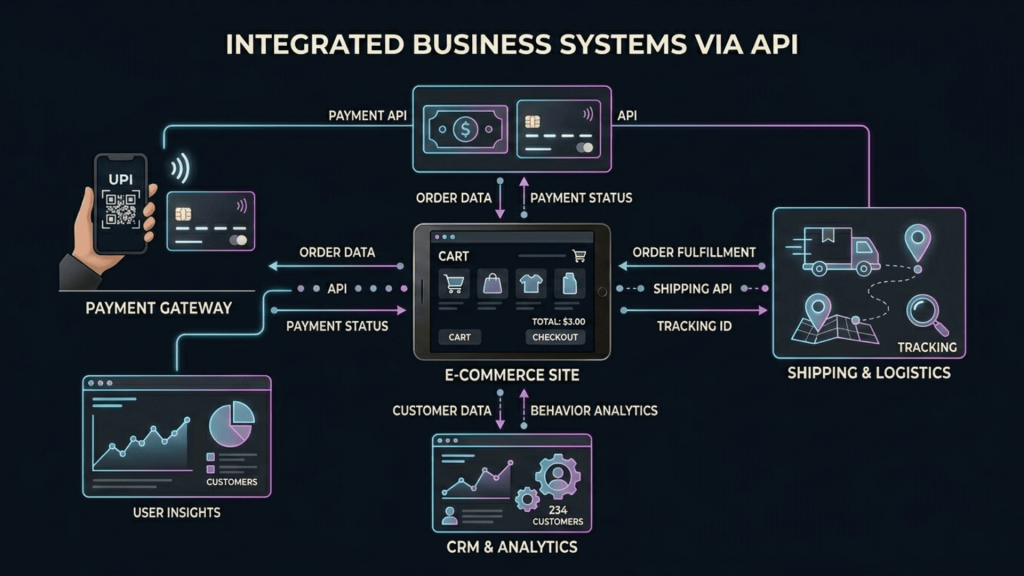
For example, if a customer orders products from an online retail site, the APIs may be used at the same time for:
- Payment processing
- Inventory update
- Order confirmation
- Shipping arrangement
And all of this is done instantly.
Types of API Integrations
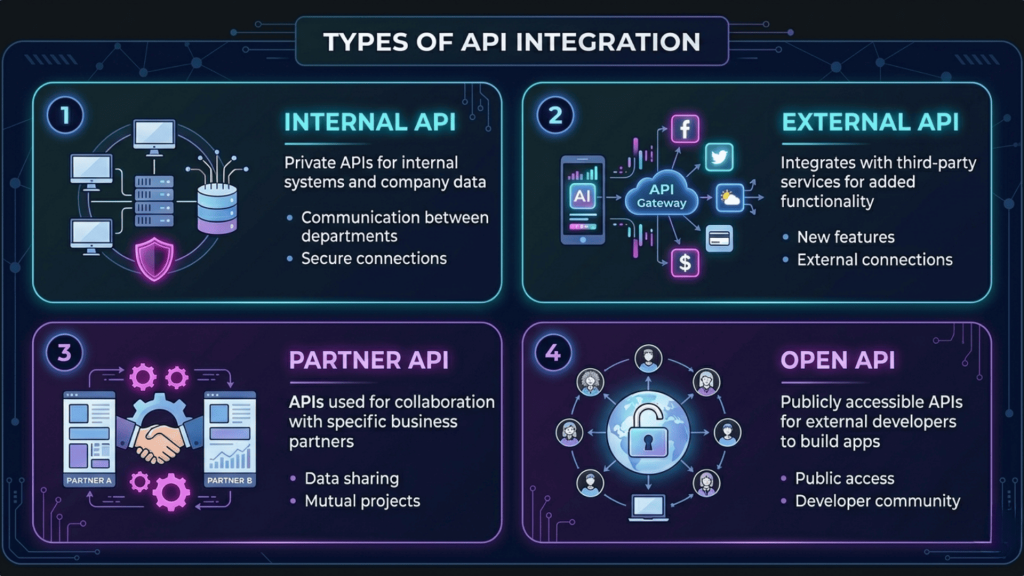
1. Internal APIs
Internal APIs are used within an organization to connect different internal systems. For example, linking a company’s HR system with its payroll software.
2. External APIs
External APIs allow third-party services to integrate with your system. Common examples include payment gateways, mapping services, and communication tools.
3. Partner APIs
These are shared with specific business partners to enable secure and controlled data exchange, often used in B2B collaborations.
4. Open APIs (Public APIs)
Open APIs are available for external developers and are commonly used to expand functionality and encourage innovation.
Why API Integration Matters
1. Enhanced Operational Efficiency
The integration of APIs helps automate routine activities like input of data, preparation of reports, and synchronization of operations. It enhances efficiency and minimizes errors.
2. Seamless User Experience
Users nowadays demand seamless online experience by ensuring integration between various services like sign-in, payment, and notification services.
3. Scalability and Flexibility
Companies may require to introduce new technology with their growing business activities. Using APIs for integration makes them scalable and adaptable without altering existing structures.
4. Real-Time Data Synchronization
APIs allow instantaneous synchronization of data among various applications. This is extremely important as it helps make decisions based on reliable data.
5. Faster Development and Innovation
Software developers have the freedom to combine different services rather than having to code from scratch, which speeds up development time as well as innovation.
6. Cost Efficiency
With the use of APIs, it is possible to cut down development cost, effort, and duplication of functionalities.
Real-World Examples of API Integration
API integration is widely used across industries:
- E-commerce Platforms: Integrating payment gateways, shipping providers, and inventory systems
- Social Media Platforms: Allowing users to sign in using Google or Facebook accounts
- Financial Services: Connecting banking systems with mobile apps for real-time transactions
- Healthcare Systems: Sharing patient data securely between hospitals and diagnostic labs
- Logistics and Delivery: Providing real-time tracking and route optimization
These integrations improve efficiency and enhance user satisfaction.
Key Benefits for Businesses
- Streamlined workflows and reduced manual effort
- Improved data accuracy and consistency
- Faster time-to-market for new features
- Better customer experience through connected services
- Ability to integrate with modern tools and platforms
Challenges of API Integration
1. Security Risks
APIs can expose sensitive data if not properly secured. Authentication, encryption, and monitoring are essential.
2. Compatibility Issues
Different systems may use different formats or protocols, requiring additional effort to ensure compatibility.
3. Maintenance and Updates
APIs need regular updates and monitoring to ensure continued performance and reliability.
4. Dependency on Third-Party Services
Reliance on external APIs means that any downtime or changes from third-party providers can impact your system.
Addressing these challenges requires proper planning, testing, and technical expertise.
Best Practices for Effective API Integration
To maximize the benefits of API integration, businesses should follow best practices:
- Use secure authentication methods such as OAuth
- Ensure proper documentation for all APIs
- Monitor API performance and usage regularly
- Design systems with scalability in mind
- Choose reliable and well-supported API providers
The Future of API Integration
As digital transformation progresses, the importance of API integration is getting higher than ever. The technologies of cloud computing, artificial intelligence, and IoT have been relying greatly on APIs for their efficient operation.
More and more businesses are embracing an API-first approach when developing software, whereby APIs are developed prior to applications. It contributes greatly to scalability, flexibility, and sustainability.
In the coming years, APIs will further foster innovations through increased connectivity among systems, platforms, and devices.
Conclusion
API integration is a fundamental component of modern software development. It allows different systems to communicate efficiently, automate workflows, and deliver seamless user experiences. By enabling real-time data exchange and system connectivity, API integration helps businesses operate more effectively and adapt to evolving technological demands.
As organizations continue to adopt digital solutions, the importance of API integration will only grow, making it a key driver of efficiency, scalability, and innovation in today’s interconnected world.